

Week 1 in our Internet of Things series was What is the Internet of Things?
You probably don’t think much about your smoke detector until it starts beeping at 3 AM. And that water heater in the basement? Out of sight, out of mind - until it isn’t.
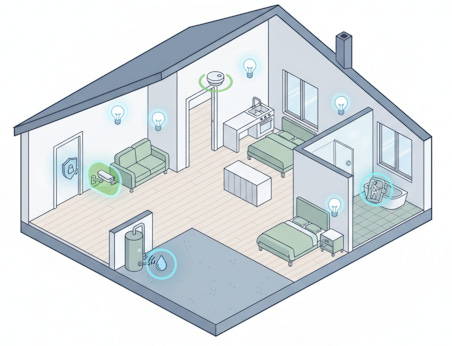
Here’s what nobody tells you about home safety: the biggest problems sneak up on you. A small leak becomes a flooded basement. A forgotten stove becomes a fire hazard. An unlocked door becomes an open invitation.
IoT devices solve a simple problem: they notice things before they become disasters. They’re basically watchdogs that never sleep, never get distracted, and actually do something useful when they spot trouble.
Help more seniors learn about technology in the New Year by supporting TheSeniorTechie.
The Water Problem Nobody Talks About
Water leaks cause more damage than fires in American homes. Insurance companies handle over one million water damage claims every year, averaging $11,000 per claim. Most of these leaks happen slowly, hidden behind walls or in basements where nobody looks until it’s too late.
A hot water heater can leak for weeks before anyone notices the musty smell. By then, you’re looking at thousands in repairs and mold remediation.
A $50 water leak sensor would catch it immediately. These little devices sit near your water heater, under sinks, or by your washing machine. When they detect moisture, they send an alert to your phone. Some can even shut off your water main automatically. (If you buy something, I may earn a small commission to support TheSeniorTechie at no cost to you—thanks!)
The Flo by Moen system monitors your entire home’s water flow. It learns your usage patterns—how much water your household typically uses and when. If you’re supposedly using 50 gallons at 2 AM (when everyone’s asleep), it knows something’s wrong and sends an alert.
Smart Smoke and Carbon Monoxide Detection
Your current smoke detector probably works fine. It’ll scream loud enough to wake the dead when there’s smoke. But what if you’re not home?
Smart smoke detectors connect to your phone. The Kidde Smart Smoke and Carbon Monoxide Detector tells you which room has the problem and what kind (smoke or CO). If you’re at the grocery store and it detects smoke in the kitchen, you know immediately.
Carbon monoxide is worse because you can’t see it, smell it, or hear it. It just slowly kills you while you sleep. Regular CO detectors beep, which is great if you’re home. Smart ones tell your phone to call emergency services if you don’t respond, and can save your life even when you’re unconscious.
Traditional detectors only help when you’re within earshot. Smart versions protect your home 24/7, whether you’re there or not.
The Door and Window Situation
Forget to lock your back door? Most people do it at least once a week. You’re halfway to the grocery store when doubt creeps in. Did I lock the door? Should I turn around?
Smart locks solve this particular flavor of anxiety. The August Smart Lock lets you check from anywhere. Not locked? Tap your phone, now it is. You can also see who came and went if you have kids or a dog walker stopping by.
Window and door sensors (like the Aqara Zigbee) are even simpler. They’re tiny magnetic contacts that stick to your doors and windows. When someone opens them, you get a notification. Set them to alert mode at night, and you’ll know immediately if a door opens at 2 AM.
These sensors provide information that used to require constant vigilance. Now your phone handles the worrying for you.
Motion Detection That Actually Makes Sense
Motion sensors have been around forever, but IoT versions are smarter. They can tell the difference between your cat walking through the living room and an actual person.
Ring and Arlo cameras use AI to detect people, animals, and vehicles. You don’t get 47 notifications because a leaf blew across your driveway. You get one notification when a person approaches your front door.
The best part? You can create rules. Motion detected between 10 PM and 6 AM? Alert me. Motion detected during the day when I’m at work? Probably the mail carrier, no alert needed.
These systems also keep recorded footage. When someone steals your Amazon package, you have video evidence. When questions arise about what happened, the footage provides answers.
The Fall Detection Advantage
Falls are the leading cause of injury death among adults over 65. About 36 million falls are reported each year, resulting in more than 32,000 deaths.
Apple Watch has fall detection built in. If you take a hard fall, it checks if you’re okay. No response after 60 seconds? It automatically calls emergency services and shares your location.
Standalone fall detection devices work similarly but don’t require wearing a watch. The Medical Guardian system includes a pendant or wristband that detects falls and connects you to emergency operators 24/7.
These devices turn what could be a life-threatening situation into a manageable emergency. Falling when nobody’s around used to mean lying there until someone happened to check on you. Not anymore.
Smart Lighting for Safety
Stumbling around in the dark causes accidents. You knock into furniture, miss a step, or trip over the dog. Motion-activated lights solve this problem without requiring you to fumble for switches.
Philips Hue and LIFX bulbs can turn on automatically when they detect motion. Walk into the bathroom at night, and the lights gently illuminate at 30% brightness so you’re not blinded. Walk into the kitchen, and they turn on at full brightness.
You can also schedule lights to turn on and off when you’re away. This makes your home look occupied, which deters break-ins. Burglars prefer dark, empty houses. A house with lights turning on at random intervals? They move on to easier targets.
The Medical Emergency Factor
What happens if you fall or have a medical emergency and can’t reach your phone? Smart speakers help with this exact scenario.
Alexa and Google Home respond to voice commands. “Alexa, call 911” works even if you’re on the floor and can’t move. “Hey Google, call my daughter” connects you to family instantly.
Amazon recently added an Alexa Emergency Assist feature. For $6 per month, saying “Alexa, call for help” connects you to a trained agent who can dispatch emergency services. They stay on the line with you until help arrives.
These voice assistants also set medication reminders, which prevent missed doses. They answer health questions. They can even detect changes in your voice patterns that might indicate health problems, though that feature is still being developed.
Gas Leak Detection
Natural gas leaks are rare but deadly. You know that distinctive rotten egg smell they add to natural gas? Not everyone can detect it, especially older adults with a diminished sense of smell.
Smart gas detectors monitor for natural gas, propane, and methane. When they detect dangerous levels, they alert your phone immediately. Some integrate with smart home systems to automatically shut off gas valves and turn on ventilation fans.
The FirstAlert Onelink system combines smoke, CO, and gas detection in one device. It talks to you instead of just beeping. “Warning: smoke detected in basement” gives you much more information than a generic alarm sound.
Setting Up Your Safety Network
Start small. You don’t need to install everything at once. Pick the biggest risk in your home and address that first.
Water damage is expensive and common, so water leak sensors make sense for most people. Smart smoke and CO detectors are inexpensive upgrades that add significant value. Door sensors give peace of mind about security.
Once you have a few devices, they start working together. Many systems use IFTTT (If This Then That) to create automated responses. If the smoke detector goes off, smart lights can automatically turn on to help you evacuate. If a door sensor triggers at night, security cameras start recording.
The initial setup takes maybe an hour per device. After that, they just work. You check the app occasionally, respond to alerts when needed, and otherwise forget about them until they save you from a problem.
The Cost Reality
IoT safety devices aren’t free, but they’re cheaper than the problems they prevent. A set of water leak sensors costs $150. That basement flood? $8,000. Smart smoke detectors run about $120 each. A house fire? Immeasurable cost.
Most devices have no monthly fees. Buy them, install them, done. Some advanced features require subscriptions—cloud storage for camera footage, professional monitoring for security systems—but basic functionality works without ongoing costs.
Compare this to traditional home security systems. ADT charges $45-60 per month for monitoring. Over five years, that’s $2,700-3,600. A self-monitored IoT system might cost $500 upfront and nothing monthly.
Privacy and Security Concerns
IoT devices collect data. They know when you’re home, when you’re away, your daily routines. This information could be valuable to hackers or data brokers.
Choose devices from reputable companies with strong encryption. Ring, Nest, and SimpliSafe have proven security records. Cheap knockoffs from unknown brands? Not worth the risk.
Use strong, unique passwords for each device. Enable two-factor authentication whenever possible. Keep firmware updated - those annoying update notifications actually fix security vulnerabilities.
Create a separate Wi-Fi network for your IoT devices. If a smart bulb gets hacked, the hacker can’t access your computer or phone. Most modern routers support guest networks, which work perfectly for this purpose.
The False Alarm Question
Will these devices constantly bother you with false alerts? Initially, maybe. New systems need adjustment.
Smart sensors learn over time. They distinguish between normal activity and actual problems. You can also adjust sensitivity settings. Too many alerts about the garage door? Increase the delay before it notifies you.
Most systems let you set “quiet hours” or create custom alert rules. No notifications about motion detection during the day when you’re expecting deliveries. Full alerts at night when unusual activity matters.
The goal isn’t to eliminate all alerts - it’s to receive meaningful notifications about actual problems. A water leak alert at 3 AM might be annoying, but it’s a lot less annoying than discovering mold three months later.
Making It Work for You
IoT safety isn’t about turning your home into a technology showroom. It’s about strategically placing devices where they prevent the most common, expensive, or dangerous problems.
If you live alone, fall detection and medical emergency features matter most. If you have a family, door sensors and cameras provide security and awareness. If you travel frequently, water sensors and smart lighting prevent disasters while you’re away.
Start with one or two devices. Learn how they work. Add more as you see the benefit. In six months, you’ll wonder how you ever lived without knowing whether your doors are locked or if water is leaking under your sink.
Your home doesn’t become safer by accident. It becomes safer when you give it the ability to notice problems and tell you about them. That’s what IoT does. Nothing more complicated than that.


Great info!
1. A carbon monoxide detector saved my family 3 Christmases ago at 12 am when it went off due to a heater malfunction. Called fire department, went to a hotel, etc. If you don’t have one, get one tomorrow!
2. Suffered a disastrous water leak from our ice maker while on vacation for 2+ weeks - led to a major house renovation - we now swear by various water detectors and remote turn off options!
Will work on some of these others when I visit my parents this month!