

You have survived decades of winters. You know how to put on a sweater. An article about surviving cold weather feels like another lecture you do not need.
Here is what changed. Your body changed. The same winter that felt brisk at fifty-five now poses real dangers at seventy-five. The real problem is not the cold itself. The problem is that your internal warning system is not what it used to be.
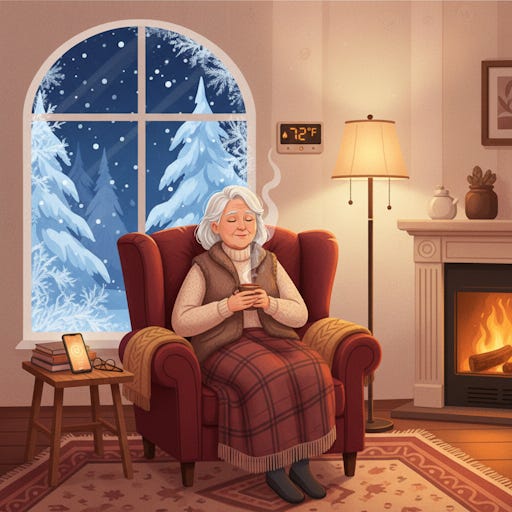
When Room Temperature Becomes Deadly
Last winter, Barbara Bolton, an 87-year-old woman in England, was found slumped over her kitchen table. Her body temperature had dropped to 82 degrees. She had refused to turn on her heat because she feared the energy bill. Her family had begged her to warm the house. She died from pneumonia brought on by severe hypothermia.
Help more seniors keep safe by learning about technology here at TheSeniorTechie.
This is the part that should grab your attention. Hypothermia can begin at temperatures as high as 60 degrees Fahrenheit for older adults. That is not a typo. Sixty degrees. A cool spring day can trigger a medical emergency inside your own home. Research from the National Institutes of Health shows extreme cold increases heart attack risk by up to 30 percent. Cold weather forces your heart to work harder to maintain body temperature. For those with heart conditions, this added strain can be fatal. About one hundred people die each year in the United States from heart-related issues caused by shoveling snow. The cold does not just make you uncomfortable. It can stop your heart.
Your aging body has lost muscle and fat, the natural insulators that once protected you. Chronic conditions like diabetes reduce blood flow. Thyroid problems affect temperature regulation. Parkinson’s disease or arthritis make it difficult to add layers or move to warmth. Memory issues can cause you to forget basic precautions. Your body no longer sends clear signals that you are getting too cold. By the time you feel uncomfortable, you may already be in danger.
Your Thermostat Can Think for You
Technology offers solutions that were science fiction twenty years ago. Smart thermostats do more than adjust temperature. They learn your habits. They monitor weather forecasts. They can cut your heating costs by 10 to 23 percent annually while keeping you safer. (If you buy something, I may earn a small commission to support TheSeniorTechie at no cost to you—thanks!)
The Ecobee Smart Thermostat Premium and other top models detect when you are away and automatically switch to energy-saving mode. More important for your safety, they monitor your heating system’s performance. If your furnace works overtime due to extreme cold, you receive an alert. If temperatures drop dangerously low inside your home, designated family members get notifications on their phones.
These devices can maintain anti-freeze temperatures around 50 to 55 degrees during extended absences. This prevents pipe freezing while conserving energy. The recovery time feature is crucial for seniors. Unlike old programmable thermostats, smart models calculate longer heat-up times needed in cold weather and adjust automatically. You never arrive home to a cold house. The system prevents energy waste while ensuring comfort.
Professional installation matters. Improper installation can reduce efficiency gains by 30 to 40 percent. The cost is offset by lower utility bills within months. For those on fixed incomes, this technology pays for itself while providing a safety net.
The Watch That Calls for Help
Medical alert systems have evolved beyond the “I’ve fallen and I can’t get up” commercials of the 1980s. Modern systems like Bay Alarm Medical’s SOS Smartwatch offer fast response times, averaging ten seconds to connect with trained professionals. The watch includes accurate fall detection, GPS location, and health tracking features.
Aloe Care Health systems work via voice activation. They include motion sensors, door sensors, and smart plug-ins for appliances like kettles. Family members receive real-time updates about daily routines. If temperature drops in the living room, you both know. If you have not made your morning tea, it might indicate a problem.
The Simple Phone Tree That Saves Lives
The quote you mentioned gets to the heart of a practical solution. Weather alerts across the Carolinas and Quebec this week are a good reminder that cold can be deadly for older adults, especially if power or heat fails. Pick one cold check habit today: put a note by your door with three people you will call when temperatures drop, and ask them to do the same for you. A simple phone tree can catch a missed heater, a frozen pipe, or a fall before it turns into an emergency.
A phone tree sounds formal and complicated. It is not. This is a system you can set up in fifteen minutes with three phone calls.
How the Phone Tree Actually Works
Pick three people you trust. It does not matter if they are family, neighbors, or friends from your church. What matters is that they live in different locations from you and from each other. Ideally, at least one of them should live in a different town. This protects everyone if a localized weather event knocks out power in your area.
These three people are your contacts. You become one of their three contacts. That is the entire system. It is not complicated because it is not supposed to be.
Now here is the key part that most people miss. Each person in your group calls one person, not all three. Think of it like links in a chain, not spokes on a wheel.
You are the starting point. When temperatures drop below freezing, you call person number one on your list. Person number one then calls person number two. Person number two then calls person number three. By the time person number three is reached, everyone in the chain knows the situation.
This design prevents everyone from trying to call everyone at the same time. It avoids overwhelming phone lines. It also prevents the confusion that comes when three people are all calling the same person simultaneously. The chain keeps things orderly.
What You Actually Say
You do not need a script. You need three or four questions and honest answers. When you call person number one, say something like this: “Hi Sarah, it is below freezing here and my heat is running fine. I am doing okay. Can you check on yourself and then call Tom? I will try to reach you tomorrow evening to catch up.”
That is it. Thirty seconds. You have shared the information that matters. Your heat is working. You are aware of the temperature and taking it seriously. You are alive and functioning. The next person in the chain will get called next.
Person number one then calls person number two. The conversation should be just as brief: “Hi Tom, this is Sarah. It is cold out and I wanted to check on you. My heat is fine and I am doing okay. Can you do a quick check on yourself and let me know if everything is okay there?”
Notice what happened. Sarah received information from you. Sarah relayed that information while sharing her own status. Sarah then asked Tom to do the same.
When someone answers, the conversation should include these key questions. “Is your heat working properly?” If the answer is no, you have found a problem. If someone says their heater is struggling, this is when you encourage them to call for service before the weekend. If pipes are frozen or the problem is serious, this is when you suggest they relocate to a family member’s house or a warming center.
“Are you staying warm?” This is about layers, blankets, and actual comfort. Some seniors will not turn on heat to save money. This question brings that issue into the open.
“Have you been outside or had any falls?” Cold weather increases fall risk. Ice and snow create hazards. Someone might not mention a fall unless you ask directly. Older adults sometimes minimize injuries out of pride or fear of losing independence.
“Do you need anything?” Milk, bread, medications, or help with snow removal. If someone is isolated or struggling, this question opens the conversation.
What Happens When You Find a Problem
This is the real value of a phone tree. It catches problems before they become emergencies. Your neighbor Harold does not answer on the first call. You call back two hours later. Still no answer. This is unusual for Harold. You call his daughter. She lives forty minutes away. She can be at his house in an hour. When she arrives, she finds that Harold fell in his kitchen and has been lying on the floor for four hours. He is conscious but cold and scared. Without the phone tree, Harold might have lain there all night.
Another example: Mary tells you her heat quit this morning. It is below thirty degrees. She has been rationing blankets and sitting in her car in the garage to stay warm. You give her three options immediately. Call an emergency heating service. Go to a warming center. Stay with family. You also text her information about local warming centers and the numbers for emergency services. Within hours, someone is at her house or she is safely at a warming center.
Setting Up Your Written List
Write down your three people with their phone numbers. Write down one backup person for each of them. Put this list by your phone or door. Write the same list for each person in your chain. Give them a copy.
The reason the quote about putting a note by your door matters is memory. When temperatures drop suddenly, you might be stressed. You might have just gotten bad news about your furnace. Memory lapses under stress. A piece of paper by your door takes the thinking out of it. You do not have to remember Sarah’s number. It is right there.
Some people use their phone contacts and set a reminder to call every person when temperatures drop below freezing. Others write the names and numbers on an index card taped to the refrigerator. The method does not matter. What matters is that when the weather turns, you know exactly who to call without hesitation.
Call at least once a month during winter months to keep the habit fresh. Keep it brief: “Just checking in. My house is warm, my furnace sounds normal, and I am doing fine. How are you doing?” These regular conversations keep the system working smoothly when real emergencies arrive.
Putting This Into Action Today
Start with the phone tree. Write three names. Make three phone calls. Explain the system in ninety seconds. This takes fifteen minutes. It costs nothing. It could save your life.
Next, check your thermostat setting. Many experts recommend keeping it at 68 to 70 degrees Fahrenheit during winter. Temperatures between 60 and 65 degrees can lead to hypothermia in older adults. The Goldilocks zone is not about comfort. It is about survival.
If you use space heaters, check them today. Plug them directly into outlets, not extension cords. Keep them three feet from anything that could burn, including walls. Never leave them unattended. For seniors with memory decline, space heaters pose fire hazards. Modern heating devices designed for seniors include auto-shutoff switches and adjustable thermostats.
Stock your emergency kit. Include extra prescription medicines, a list of medications with dosages, extra eyeglasses, hearing-aid batteries, and warm blankets. Keep a battery-powered radio that can charge your phone. NOAA weather updates become critical during power outages.
Walk through your home and check for drafts. Place rolled towels in front of doors. Keep blinds and curtains closed. Use weather stripping around windows. These simple steps reduce heat loss and lower heating costs.
Technology can feel overwhelming. You do not need every gadget mentioned here. Pick one. The phone tree costs nothing. A smart thermostat provides immediate feedback on your home’s safety. A medical alert system offers peace of mind for you and your family.
Cold weather safety is not about fear. It is about preparation. You have spent a lifetime solving problems. This is one more problem with clear solutions. The stakes are higher now. Your body will not warn you like it once did. Your technology and your community can provide the warnings you need.
Make that list of three names. Tape it by your door. Make the first phone call today. Winter is coming. You will be ready.


While there are devices that can be early warning signals, and that's such a good thing, the idea I like the best is the phone tree. Not only is it helpful to check in on our neighbors and friends to make sure that they have what they need, the phone tree fosters a sense of close knit community -- and in my estimation, that is truly invaluable. Thanks for another great piece.