

You’ve been driving for decades without a second thought. And now, maybe for the first time, you’re wondering if you’re still as sharp behind the wheel as you used to be. That question alone shows good judgment.
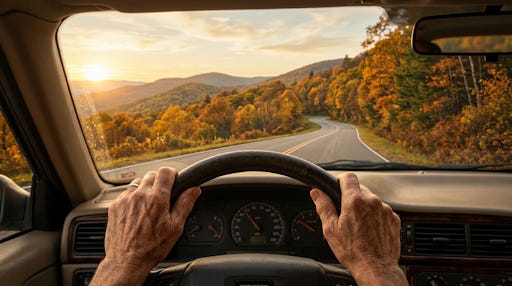
Driving is independence. Losing it isn’t just inconvenient. For many people, it changes everything about daily life.
What Actually Changes as You Age
Aging doesn’t strip your driving skills overnight. It’s gradual, which is exactly why it’s easy to miss. A few things shift whether you notice them or not.
Vision: Contrast sensitivity drops. Night driving gets harder. Glare from headlights becomes more disorienting
Reaction time: Your brain still processes what’s happening, just a little slower than it used to
Neck and shoulder stiffness: Checking blind spots takes more effort, and sometimes doesn’t happen
Medications: A surprising number of common prescriptions affect alertness and judgment
Cognitive changes: Memory loss conditions like Alzheimer’s affect over 6 million Americans, and driving is often one of the first skills impacted
None of this means you have to stop driving. It means you need to pay attention.
Ready for the full TheSeniorTechie treatment? Our paid members enjoy monthly brain health deep dives, all Premium Guides, and lifetime TechMaid tech support—a $50/year service included with membership.
The Numbers Tell a Complicated Story
Here’s something that surprises most people: drivers aged 65 to 74 actually have fewer accidents per capita than drivers in their 20s and 30s. Experienced drivers tend to be cautious, stick to familiar routes, and avoid bad conditions.
But here’s the catch. When older drivers do get into crashes, the outcomes are worse. Drivers 70 and older have higher crash death rates per 1,000 crashes than middle-aged drivers. Physically, there’s less margin for error.
Each day in the U.S., 25 older adults are killed and more than 740 are injured in crashes. That’s not meant to scare you. It’s meant to take the question seriously.
Warning Signs Worth Paying Attention To
AAA says most people can drive safely well into old age, and there’s no magic age when the keys should disappear. But there are real warning signs.
Watch for these, in yourself or someone you care about:
Getting lost on familiar routes
Drifting out of your lane or clipping curbs on right turns
Close calls that are happening more frequently
Feeling stressed, confused, or exhausted after driving
Reluctance to drive at night or on highways
If several of these sound familiar, a certified driver rehabilitation specialist can do a professional on-road assessment. It’s not a test you pass or fail. It’s information.
Technology That Actually Helps
Modern cars have gotten genuinely useful for older drivers. Not gimmicky, actually useful. If you’re buying or leasing a car in the next few years, pay attention to these features.
Blind spot monitoring: Alerts you when a car is in your blind spot, especially helpful if neck stiffness limits your head turns
Rear cross-traffic alert: Warns you when something is moving behind you while backing up
Lane keeping assist: Gently steers you back if you drift without signaling
Forward collision warning: Alerts you if you’re closing in on the car ahead too fast
Adaptive cruise control: Maintains a safe following distance automatically on highways
A 2022 study found 70% of older drivers who used these technologies said they felt safer. That tracks with my experience. These aren’t crutches. They’re the same kind of help that power steering and automatic transmissions were 50 years ago.
Having the Honest Conversation
If you’re worried about someone else’s driving, bring it up gently and specifically. “You seemed stressed when that car merged” lands better than “I don’t think you should be driving.”
And if you’re assessing yourself, don’t rely only on your own opinion. Ask your doctor. Ask someone who rides with you regularly. The best time to make a plan is before a crisis forces one.
Giving up driving is hard. But staying safe on the road, for yourself and everyone else, is something to take pride in managing well.
What’s the biggest challenge about driving that’s crept up on you in the last few years?

