

People are living longer than ever, but not necessarily better. Studies show the gap between how long we live and how long we live in good health is more than a decade in the U.S. That gap is getting wider, not smaller.
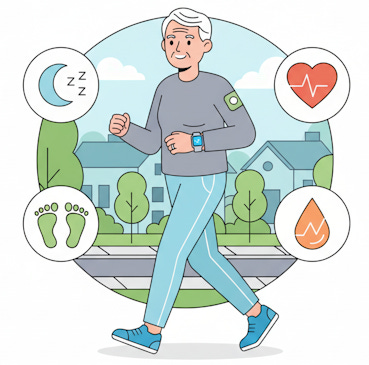
That is the real problem: too many “extra” years at the end spent managing illness, low energy, and loss of independence.
Longevity wearables try to chip away at that gap. They sit quietly on your wrist or finger, watching things like your sleep, heart rhythm, and activity. Then they give you simple feedback you can use between doctor visits.
Think of them as a gentle, always‑on check engine light for your body, not a replacement for your mechanic.
Paid subscribers get full access to all Premium Guides (including our monthly brain health deep dive) plus lifetime tech support from our partner Tech Maid (a $50/year value, included for free).
What Makes A Wearable “Longevity‑Focused”
Old‑school trackers mostly cared about steps. Ten thousand or bust.
Longevity wearables look at deeper signals that are linked to aging well:
Sleep quality and sleep stages
Heart rate and heart rate variability (HRV)
Resting heart rate and stress patterns
Activity and recovery balance
Sometimes even blood sugar in real time
HRV is worth a quick mention. It measures the tiny changes in time between heartbeats. Higher HRV usually means your nervous system is flexible and handles stress better. Lower HRV is linked to a higher risk of heart problems and earlier death.
You cannot feel HRV on your own. These devices watch it for you at night and turn it into a simple score. Over time, that score tells you whether your habits are helping or quietly wearing you down.
Apple Watch: A Health Safety Net On Your Wrist
If your biggest worry is, “What if something happens and I am alone?”, the Apple Watch is a solid first choice. (I may earn a small commission if you buy, at no extra cost to you.)
Recent Apple Watch models can:
Detect hard falls and call emergency services if you do not respond
Record an ECG and flag irregular heart rhythms like atrial fibrillation
Track sleep and heart rate
Trigger SOS and share your location with 911
There are plenty of real‑world stories. An older woman’s Apple Watch detected a fall, called for help, and doctors ended up discovering lung cancer early enough for treatment. An 83‑year‑old man collapsed near an airport; his watch alerted emergency services and he got life‑saving care for a blood clot.
Apple even turns fall detection on automatically if your age is set to 65 or older. You pay for the watch itself, but you do not need a subscription for the health features.
Problem this solves: “If I fall or have a heart issue when I am alone, who will know?”
Oura Ring: Turning Sleep Into A Longevity Tool
If you know your sleep is not great, but you have no idea why, the Oura Ring is built for that.
It looks like a simple metal band, but it tracks:
How long and how well you sleep
Your nightly HRV and resting heart rate
Body temperature trends
Breathing rate and a daily “Readiness” score
Poor sleep is tied to higher risk of heart disease, dementia, and depression. Good, consistent sleep does the opposite. The Oura Ring 4 uses “Smart Sensing” so its recessed sensors adapt better to different finger shapes and skin tones, which improves accuracy.
You buy the ring once, then pay a small monthly membership for full insights and history. The magic is not in a single night. It is in watching patterns: what happens when you go to bed earlier, skip late‑night screens, or have that extra glass of wine.
Problem this solves: “I am tired all the time, but I do not know what my sleep is really doing.”
WHOOP And Garmin: Staying Active Without Overdoing It
If you are more focused on moving your body, but you do not want to overdo it, two names come up a lot: WHOOP and Garmin.
WHOOP is a small band with no screen. You wear it day and night. It scores:
How hard you pushed that day (strain)
How well you slept
How recovered you are
Its Healthspan feature goes a step further. It estimates a “WHOOP Age” and tells you if your habits are helping you age slower, similar, or faster than your calendar age. Membership is subscription‑based and includes the hardware.
Garmin Venu 3 is more like a classic smartwatch with a bright screen and long battery life, often up to 14 days on a charge. It tracks sleep, HRV, stress, and gives you “Body Battery” and “Fitness Age” scores so you can see if you are recovered enough for a big day or should ease back. You pay once for the watch; no subscription is needed.
Problem these solve: “How do I stay active and strong for the long haul without running myself into the ground?”
Continuous Glucose Monitors: A Short Metabolism Experiment
A continuous glucose monitor, or CGM, is a tiny sensor you wear on your arm. It reads your blood sugar all day and night and sends the data to an app on your phone.
Originally, CGMs were for people with diabetes. Recently, the FDA has cleared some systems, like Dexcom Stelo and Abbott Lingo, for over‑the‑counter use, including for people without diabetes who want to understand their metabolic health better.
Why care if you do not have diabetes? Because blood sugar spikes and crashes are tied to heart disease, weight gain, and brain health over time. A CGM shows you, very clearly:
Which meals cause huge spikes for you
How a short walk after dinner flattens those spikes
How stress and poor sleep push your blood sugar up even without food
Most longevity doctors suggest using a CGM for a few weeks to learn how your body responds, then using that knowledge to change how and when you eat.
Problem this solves: “I hear about ‘blood sugar’ all the time, but I have no idea what mine is actually doing.”
How To Start Without Getting Buried In Data
You do not need a drawer full of gadgets. One well‑chosen device is plenty.
A simple plan:
Decide your top concern right now: safety, sleep, fitness, or metabolism.
Match that concern to one device.
Safety / heart: Apple Watch
Sleep / energy: Oura Ring
Sustainable activity: WHOOP or Garmin
Metabolism: short‑term CGM
Use it for 30 days before you judge it.
Focus on one or two key numbers, not every graph.
Share anything worrying with your doctor, especially heart rhythm alerts, long‑term heart rate trends, or major sleep changes.
The goal is not to stare at your phone all day. The goal is to let the device quietly nudge you: go to bed a little earlier, walk after dinner, take a rest day, or call your doctor.
In the end, the big problem is that many of us spend too many years at the end of life feeling lousy. Longevity wearables cannot stop the clock, but they can give you earlier warnings and clearer feedback than you have ever had.
The tech collects the signals. The solution is what you choose to do with them.

