

You lie down exhausted and wake up at 3 a.m. staring at the ceiling. Sound familiar? Millions of older adults deal with this exact problem, and most of them assume it’s just part of getting older. It doesn’t have to be.
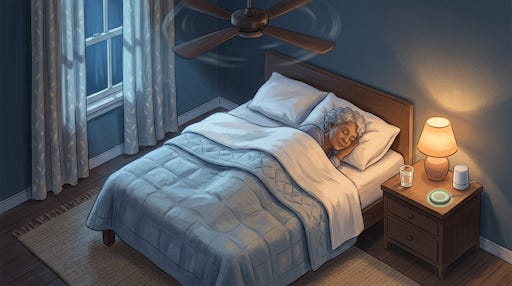
How Much Sleep Do You Actually Need?
The number might surprise you. According to the National Sleep Foundation, adults 65 and older still need seven to eight hours of sleep every night. You don’t need less sleep as you age — that’s a myth. What changes is how easily you get there.
Older adults tend to go to bed and wake up earlier, spend more time in lighter sleep stages, and wake up more frequently during the night. That’s a biology shift, not a personal failing.
Why it matters: Consistently sleeping fewer than seven hours has been linked to memory problems, a weakened immune system, and higher risk of falls. Sleep isn’t a luxury. It’s maintenance.
Keep your brain sharp with monthly brain health and AI For Seniors Deep Dives, and premium tech guides by becoming a Premium subscriber. TechMaid 24/7 tech support (a $50/year value) included.
Why Sleep Gets Harder After 60
A few things happen as we age that make quality sleep harder to come by:
Your body produces less melatonin, the hormone that signals it’s time to sleep
Your circadian rhythm shifts earlier, making late nights feel impossible
You become more sensitive to noise, light, and temperature changes
Medications for common conditions can interfere with sleep cycles
None of these are your fault. But most of them are manageable.
Practical Steps to Sleep Better Tonight
Actionable step: Pick just one of these to try this week. Don’t overhaul everything at once.
Keep a consistent schedule. Go to bed and wake up at the same time every single day, including weekends. This resets your circadian rhythm faster than almost anything else.
Watch your naps. A short nap before 2 p.m. is fine. A 90-minute snooze at 4 p.m. will wreck your night. Keep naps to 30 minutes or less.
Cut the screens an hour before bed. The blue light from tablets, phones, and TVs delays melatonin release. Try a paperback instead.
Cool down your bedroom. A slightly cooler room signals to your brain that it’s time to sleep. Most people sleep best between 65 and 68 degrees Fahrenheit.
Get outside during the day. Two hours of natural sunlight helps regulate your sleep-wake cycle. Even a morning walk counts.
Exercise, even gently. A Northwestern University study found that regular aerobic exercise improved sleep quality in older adults from “poor sleeper” to “good sleeper”. A 30-minute walk four times a week made a measurable difference.
Technology That Can Help
I’ll be honest: most “sleep gadgets” are either overpriced or overhyped. But a few genuinely useful options exist.
Sleep trackers like the Oura Ring (Generation 3) or a basic fitness watch can show you how much deep sleep you’re actually getting versus how much you think you’re getting. That data is eye-opening.
White noise machines are simple and effective. They mask sudden sounds that jolt you awake, and they don’t require any app, account, or subscription.
Smart alarm clocks like the Hatch Restore 2 simulate a gradual sunrise to wake you gently instead of with a jarring alarm. That alone can change how you feel in the morning.
Temperature control pads like the Chilipad Dock Pro let you set your mattress temperature precisely. Expensive, yes, but worth knowing about if overheating is your main problem.
Avoid sleep apps that require you to stare at your phone in bed. That’s counterproductive.
When to Talk to a Doctor
If you’ve tried these steps for a few weeks and still can’t sleep, don’t white-knuckle through it. Conditions like sleep apnea are common and underdiagnosed in older adults. Your doctor can rule out medical causes and discuss safe options — including whether a low-dose melatonin supplement makes sense for you. You can also report sleep-related scams or fraudulent “cure” products at ReportFraud.ftc.gov. For evidence-based sleep guidance, the NIH’s National Institute on Aging is a solid resource.
Frequently Asked Questions
Q: Do seniors really need less sleep than younger adults?
A: No. Seniors still need seven to eight hours per night, according to the National Sleep Foundation. Sleep patterns change, but the need doesn’t disappear.
Q: Is it safe for seniors to take melatonin supplements?
A: Melatonin can help regulate the sleep cycle, but always check with your doctor first, especially if you take other medications.
Q: What’s the simplest sleep technology to start with?
A: A basic white noise machine is the easiest, cheapest, and most effective option for most older adults.
What's the single biggest thing that disrupts your sleep at night?


Having to urinate.