

You might think environmental activism belongs to younger generations marching with signs. But there’s a quieter revolution happening online, and it’s perfectly suited for anyone with curiosity and an internet connection.
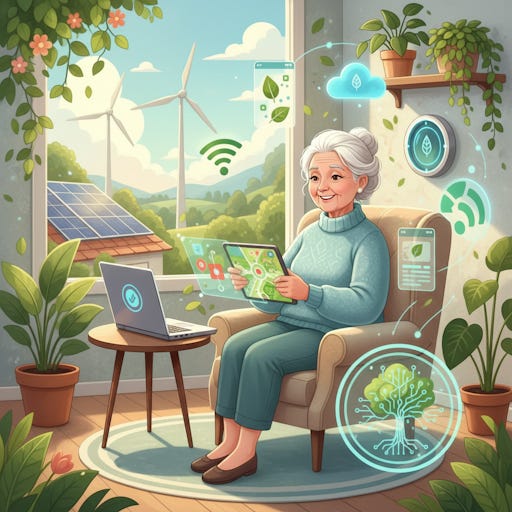
Digital literacy and environmental education aren’t separate journeys anymore. They’ve merged into something practical: learning tools that help you understand climate issues while simultaneously reducing your own environmental footprint. The devices you’re already using—or learning to use—can become your gateway to both knowledge and tangible change.
What problem does this solve? The gap between wanting to help the planet and knowing where to start. Between feeling intimidated by technology and recognizing its practical benefits. Between living on a fixed income and reducing monthly expenses through smarter energy use.
Join TheSeniorTechie and help make technology accessible for every senior. Paid subscribers get full access to Premium Guides plus LIFETIME access to free tech support from our partner Tech Maid - while supporting our mission to reach more seniors who need it.
Online Resources That Make Climate Science Accessible
The internet offers dozens of environmental courses designed with older learners in mind. Cornell University’s RISE Program (Retirees in Service to the Environment) specifically trains adults over 60 as environmental leaders through hands-on learning, field trips, and community projects. The program addresses everything from climate change to water quality and waste management.
Coursera hosts climate change courses that let you learn at your own pace, exploring greenhouse gas emissions, climate modeling, and sustainable practices without deadlines or pressure. Many platforms now offer recorded lectures you can pause, rewind, and revisit. It’s a far cry from traditional classroom settings where you either keep up or fall behind.
Seniors4Change, a European initiative, specifically combines digital literacy training with sustainable practices education. Their approach recognizes that learning to navigate online tools and understanding environmental issues complement each other naturally.
Why Digital Environmental Learning Works for Older Adults
Traditional environmental education often assumes participants can travel to in-person workshops or keep up with fast-paced presentations. Online learning removes those barriers.
You control the speed. Confused about carbon footprints? Replay that section. Need to look up a term? Pause and search. The flexibility transforms learning from stressful to manageable.
Programs like the Seniors Climate Action e-learning modules cover environmental problems, digital tools for raising awareness, and practical solutions you can implement at home. The bite-sized format means you’re not committing to semester-long courses—just focused learning sessions that fit your schedule.
These resources also connect you with communities of like-minded learners. Discussion forums and online groups create spaces where questions don’t feel foolish and shared experiences build confidence.
Smart Home Devices That Slash Energy Bills
Environmental stewardship and personal finance intersect beautifully with smart home technology. These aren’t gadgets for gadget’s sake. They’re tools that pay for themselves through reduced utility costs.
Smart Thermostats Save Real Money
Smart thermostats learn your preferences and adjust heating and cooling automatically. According to Nest research, homeowners save 10-12% on heating and 15% on cooling costs, totaling $131 to $145 annually.
The Amazon Smart Thermostat offers budget-friendly entry with voice control via Alexa. You set it once, and it adapts to your routine—lowering temperatures when you’re out, adjusting before you wake up, and optimizing energy use based on local weather patterns. (If you buy something, I may earn a small commission to support TheSeniorTechie at no cost to you—thanks!)
Remote control matters too. Forgot to adjust the thermostat before leaving for a week? Change it from your phone. Have adult children or caregivers who help manage your home? They can monitor and adjust settings remotely, ensuring comfort without waste.
Smart Lighting and Power Strips Cut Hidden Costs
LED bulbs paired with smart controls dim, schedule, and turn off automatically. The long lifespan means fewer replacements, and programmable settings ensure lights aren’t burning electricity in empty rooms.
Smart power strips tackle “phantom power” - electricity devices consume even when turned off. TVs, computers, and coffee makers quietly drain energy while idle. Smart strips detect inactivity and cut power automatically, eliminating waste without requiring you to unplug everything manually.
Motion-sensor lights in hallways and stairways serve double duty: they reduce energy consumption while improving safety by illuminating paths automatically in the dark.
E-Waste: The Electronics You Own Have Environmental Impact
That old phone in your drawer contains precious metals and toxic materials. When electronics end up in landfills, they leach harmful substances into soil and water. But recycling and donating create positive outcomes instead.
Where to Recycle Old Electronics Responsibly
Best Buy operates America’s largest retail e-waste collection program, having recycled over 2 billion pounds of electronics since 2009. You can bring up to three items per household per day to most stores during regular hours with no appointment needed.
They accept computers, monitors, phones, tablets, printers, TVs, and even appliances like microwaves. Many items are free to recycle, though some larger ones may have small fees.
The EPA certifies electronics recyclers through two standards: the R2 Standard and e-Stewards Standard. Both maintain searchable lists of certified facilities in your area, ensuring your electronics are processed safely and materials are recovered properly.
Oregon recently expanded its electronics recycling program to include scanners, DVD players, game consoles, routers, and modems. California added battery-embedded products to its e-waste program in 2026. These expanding programs make responsible disposal increasingly convenient.
Donation Programs That Extend Device Lifespans
Functional but outdated devices don’t need to be recycled: they can be refurbished and given new life. Tech 4 All Tennessee collects, refurbishes, and provides computers and tablets to digital literacy training participants, keeping over 2 million pounds of e-waste out of landfills.
Second Wave Recycling accepts phones, tablets, gaming devices, and even charging cables. Newer devices are refurbished and sold; older ones are recycled responsibly. Proceeds fund designated charities, turning your old electronics into community support.
The National Coalition Against Domestic Violence partners with Cellular Recycler to accept phones, laptops, cameras, and game consoles. After wiping personal data, they refurbish devices and use sale proceeds to fund domestic violence prevention programs.
Apps That Make Environmental Action Tangible
Environmental apps transform abstract concerns into daily actions. iRecycle locates recycling centers near you for specific materials like batteries, electronics, and plastics that municipal programs don’t accept.
Energy-monitoring apps connect to smart plugs and show real-time electricity consumption by device. Seeing which appliances cost the most to run motivates behavior changes that save money while reducing environmental impact.
Building Confidence in Both Digital and Environmental Skills
Learning technology feels less intimidating when it serves a concrete purpose beyond “keeping up with the times.” Environmental education provides that purpose.
When you’re motivated to understand climate change, you’ll learn to navigate online courses. When you want to reduce energy bills, you’ll figure out smart thermostat apps. When you’re ready to recycle responsibly, you’ll search for local programs and use online locator tools.
Community programs recognize this connection. Many libraries and senior centers now offer digital literacy workshops that incorporate environmental themes, teaching Gmail, Google Maps, and internet safety alongside topics like environmental awareness.
The RISE Program found that combining environmental education with hands-on projects improves participants’ confidence and provides health benefits through physical activity and community engagement. Learning becomes social, purposeful, and immediately applicable.
The Intersection of Lifelong Learning and Sustainability
Digital tools empower both continued learning and reduced environmental impact. These aren’t competing priorities—they reinforce each other.
Online courses eliminate the carbon footprint of commuting to classes. Smart home devices reduce energy consumption while teaching you new technological skills. E-waste recycling programs often include online locators and information portals that build your comfort with digital navigation.
Every generation brings different strengths to environmental stewardship. Older adults offer time, life experience, and dedication to causes that matter. Digital literacy removes barriers that previously limited participation, transforming environmental concern into practical action that benefits both your household budget and the planet’s future.
The learning curve exists, but it’s gentler than you might expect. And the payoff—lower bills, reduced waste, deeper understanding of climate issues, and connection with communities working toward solutions—makes the effort worthwhile.

