

You come home with groceries, set them on the counter, and realize there’s no one to ask whether you already bought milk. That may make you smile. Or it may bring back someone you miss.
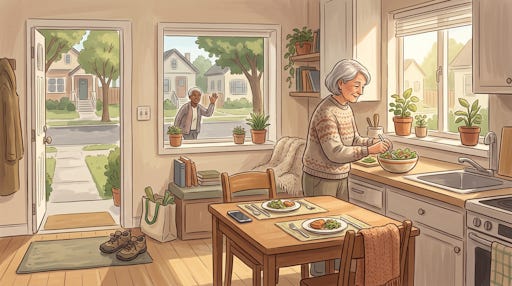
Living alone in later life isn’t one experience. Some of you have always liked your own place. Others live alone because a spouse or partner died, or because a marriage ended. The difference matters. This article looks at the ordinary parts of solo living, including meals, health, and company, without assuming your home needs fixing.
Keep your brain sharp with monthly Brain Health and AI For Seniors Deep Dives, and premium tech guides by becoming a Premium subscriber. TechMaid 24/7 tech support (a $50/year value) included. You also won’t see this message.
How did you come to live alone?
If you’ve lived alone for years, you probably have routines that suit you. You know which cupboard holds the coffee. You decide when to eat and whether to answer the phone. Help with a heavy box might be welcome. A lecture about getting a roommate probably isn’t.
After a death, the practical questions can arrive while you’re grieving. Who handles the car insurance? How much food do you buy for one? The National Institute on Aging notes that partners often divide household jobs, leaving the surviving person to learn unfamiliar tasks. Its guide to coping with grief also describes how appetite and concentration can change after a loss.
Divorce can leave a different tangle. You might feel relieved to close your own front door, then feel sad while setting one place at dinner. You don’t have to pick one feeling and defend it.
Ask yourself what you want to keep about your life at home. Then name one task that feels harder than it used to. Those two answers tell you more than the fact that you live alone.
Who notices the little things now?
When you share a home, another person often notices small changes. They hear the smoke alarm chirp. They see that you left your coat at the restaurant. They may ask why you haven’t eaten much today.
That quiet exchange disappears when you live alone. It doesn’t mean you can’t manage. It means you do the noticing yourself, including on days when you’re tired or ill.
What happens if you wake up dizzy and decide not to drive? Could you get groceries or reach a medical appointment? Write down two people or services you could call for a ride, food, or help at home. Put the list somewhere you’ll find it without hunting through your phone.
There’s a money side, too. A shared household can split some costs; a solo household generally can’t. Pew Research Center found that older adults living alone reported less financial comfort than those living with others. That finding describes a group, not your bank account, but it’s reason enough to review which household jobs and bills now fall entirely to you.
What changes when you cook for one?
Dinner can lose its appeal when you’re the only person eating it. Maybe cooking has always been a nuisance. Maybe you loved doing it together, and the empty chair is the hard part.
Have you caught yourself eating crackers instead of making a meal because washing a pan felt like too much trouble? Keep a few meals you genuinely like and can prepare with little effort. Freeze portions when you cook more than you need, and make a date for lunch with someone whose company you enjoy. NIA specifically suggests making mealtime plans when grief has changed your appetite or interest in cooking.
Food also gives you a reason to leave home. Shopping at a familiar store or meeting someone for lunch puts a little shape around the week. If getting groceries has become difficult, delivery can solve that errand. It won’t replace the conversation you used to have at the table, so consider those needs separately.
How would you get help quickly?
A fall or sudden illness can frighten anyone. Alone, the extra worry is whether you can reach help and whether someone knows how to reach you.
Start with a person, not a purchase. Ask someone if they’re willing to be your emergency contact. Agree on when they should call again, come over, or seek help if you don’t respond. Make sure they know how to get into your home when necessary.
Then look at the tools you already own. If you use an iPhone, Apple explains how to add emergency contacts and health information in Medical ID, which first responders can view from the Lock Screen when you enable that option. Walk through the setup while you’re well; an emergency is a rotten time to learn a new menu.
A medical alert device may make sense if reaching a phone is a concern. Before paying for one, ask where it works, whom it contacts, and whether you’d wear it. No device can help much from a drawer.
Who’s part of your week?
Living alone and feeling lonely aren’t the same thing. You can treasure a quiet house and have a full social life. You can also live with someone and miss the kind of conversation you need. The National Institute on Aging distinguishes loneliness, a distressing feeling, from social isolation, which means having few regular contacts.
Still, living alone can make connection less automatic. Without another person at breakfast, a few canceled plans may leave you with a surprisingly quiet week. What gives you a reason to get out, or someone you look forward to calling?
Put one recurring activity on your calendar. It might be a walk, a class, a volunteer shift, or Tuesday lunch. A video call can keep a distant friend close. You don’t need to fill every hour, just protect the company that makes your days better.
Family can be part of that, but a daily “checking up on you” call may feel more like an inspection than a visit. Tell relatives what you’d welcome: a Sunday conversation, help with appointments, or a call if they haven’t heard from you by an agreed time. Clear arrangements spare everyone some guessing.
Is living alone a problem?
No. Living alone is a way of living, not a diagnosis. Moving in with someone wouldn’t automatically fix loneliness, grief, a tight budget, or trouble getting to the doctor. It might solve a particular problem; it might create others.
The better question is whether your current arrangements let you eat well, get help when you need it, see the people you want to see, and enjoy being home. If one part isn’t working, work on that part. You deserve useful help without surrendering every bit of privacy and choice.
Frequently Asked Questions
Q: Should I give a family member a house key?
A: A house key can help a trusted person reach you if you can’t answer the door. Agree on when they may use it.
Q: Can I ask for help without promising regular check-ins?
A: You can ask for help with one job, such as a ride, and discuss check-ins separately.
Q: What if I want to live with someone again?
A: Wanting company is reason enough to explore that choice. Think about the daily arrangements you’d enjoy, not only the address.
What’s one part of living alone you’d like to keep, and one part you’d change?

