

This is Week 8 of our series on the Internet of Things. You can read previous articles at TheSeniorTechie.com.
Your smart home devices are convenient, but they’re also collecting data about your daily habits, schedules, and preferences. The most common security issues with smart home devices include privacy intrusions, hacking attempts, and malware infections. You can’t eliminate every risk, but you can reduce your vulnerability significantly with some straightforward steps.
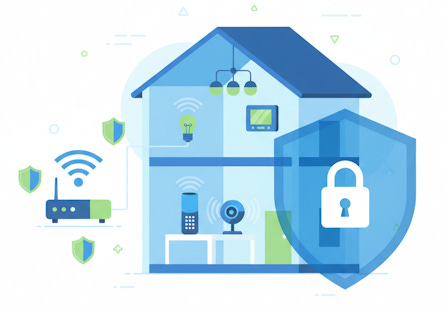
Smart home devices are constantly connected to the internet. That’s how they work. But this connection creates vulnerabilities that didn’t exist when your thermostat was just a dial on the wall.
Each device becomes a potential entry point for someone with malicious intent. Your smart camera could be accessed remotely. Your voice assistant might be recording more than you realize. The data these devices collect can reveal when you’re home, when you’re sleeping, and even what you’re discussing in your living room.
The interconnected nature makes this worse. Data collected by one device often gets shared with other devices or third-party services. You might not even know where your information is going.
Paid subscribers get full access to Premium Guides - including a monthly deep dive into brain health - plus LIFETIME access to free tech support from our partner Tech Maid.
Start With Your Wi-Fi Network
Your home network is the foundation of smart home security. If someone gets access to your Wi-Fi, they can potentially control every connected device in your house.
Change your router’s default name and password immediately. Most routers come with generic credentials that are easy for attackers to guess. Use WPA3 encryption if your router supports it, or at minimum WPA2.
Create a separate network just for your smart home devices. Most modern routers let you set up a guest network. Put all your IoT devices on that separate network. This way, if a smart bulb gets compromised, the attacker won’t have direct access to your computer or phone.
Enable your router’s firewall. It acts as a barrier controlling what traffic can flow in and out of your network.
Choose Devices That Respect Privacy
Not all smart home devices are created equal when it comes to security. Before buying any new device, read the manufacturer’s privacy policy. If they’re vague about data collection or sharing practices, that’s a red flag.
Look for devices that use end-to-end encryption. This means your data is scrambled from the moment it leaves the device until it reaches its intended destination. Even if someone intercepts the data, they can’t read it.
Check whether the manufacturer regularly releases security updates. Devices that haven’t been updated in years are vulnerable to known exploits.
Consider using protocols like Zigbee or Z-Wave for your smart devices. These operate on a different network than your Wi-Fi and can provide better separation between your smart devices and the internet, especially when paired with a privacy-focused hub.
Adjust Every Device’s Privacy Settings
Don’t accept the default settings on any smart home device. Manufacturers often enable every feature by default, including ones you don’t need and that collect unnecessary data.
Disable voice recording storage on your smart speakers unless you actually need that feature. Review and delete old recordings regularly if you do keep them enabled.
Turn off location tracking if the device doesn’t require it to function. Your smart thermostat might need location data to adjust temperature efficiently, but your smart bulb certainly doesn’t.
Limit which third-party apps can access your smart home devices. Only grant permissions to applications you truly trust and actually use.
Keep Everything Updated
Manufacturers release firmware updates to patch security vulnerabilities. If you don’t install these updates, you’re leaving known security holes open.
Enable automatic updates whenever possible. This ensures your devices get security patches without you having to remember to check.
For devices that don’t support automatic updates, set a quarterly reminder to manually check for new firmware. It’s tedious, but it matters.
Create Strong Access Controls
Each person in your household should have their own login credentials for your smart home system. This provides both security and a personalized experience for each user.
Use strong, unique passwords for every device and service. Don’t reuse passwords across different accounts. If one service gets breached, you don’t want attackers to have access to everything else.
Set up two-factor authentication wherever it’s available. This adds a second verification step beyond just your password, making unauthorized access much harder.
Regularly review who has access to your devices. If you gave temporary access to a house sitter or repair person, revoke those permissions when they’re no longer needed.
Monitor What’s Happening
Pay attention to unusual behavior from your devices. If your smart camera suddenly starts transmitting large amounts of data at odd hours, that could indicate it’s been compromised.
Check your network regularly to see what devices are connected. If you spot something you don’t recognize, investigate immediately.
Conduct a security audit every few months. Review the settings on each device, check for firmware updates, and verify that privacy settings are still configured the way you want them.
The Reality of Smart Home Security
Perfect security doesn’t exist. Every connected device represents some level of risk. But that doesn’t mean you should avoid smart home technology entirely.
The key is informed decision-making. Understand what data each device collects and why. Weigh the convenience against the privacy trade-offs. Then implement the security measures that make sense for your situation.
You don’t need to become a cybersecurity expert. These basic steps—securing your network, choosing reputable devices, adjusting privacy settings, keeping firmware updated, and monitoring your system—will significantly reduce your vulnerability.
Your smart home should make life easier, not give you something else to worry about. With these protections in place, you can enjoy the benefits while minimizing the risks.

