

Remember when your coffee maker just made coffee? When your thermostat was a dial on the wall? When checking if you left the garage door open meant driving back home to see?
Those days are gone. Welcome to the Internet of Things for seniors and everyone else who wants their home to work smarter.
The Way Things Used to Be
Back in the 1980s and 90s, computers sat on desks. They were big, beige boxes that did one job: computing. Your appliances did their jobs too, but they couldn’t talk to anything. Your refrigerator kept food cold. Your alarm clock woke you up. End of story.
The internet changed everything, but slowly. First, we connected computers to each other. Then we put the internet in our pockets with smartphones. But our stuff? Our everyday objects? They stayed dumb and disconnected.
Until someone asked a simple question: what if everything could go online?
Support TheSeniorTechie’s effort to help more seniors learn about technology.
The Lightbulb Moment (Literally)
In 1990, a researcher at Carnegie Mellon University got tired of walking to the vending machine only to find it empty. So he connected the machine to the internet. Now he could check from his desk whether it had Coke.
That Coke machine became the first device in what we now call IoT. The term “Internet of Things” came later, in 1999, when Kevin Ashton used it in a presentation at Procter & Gamble. He was trying to sell his bosses on putting tiny radio chips in products. The name stuck.
For years, the idea stayed mostly theoretical. The technology wasn’t ready. Internet connections were too expensive. Sensors were too big. Batteries died too fast.
When Smart Home Technology Became Reality
Then smartphones exploded in popularity. Suddenly, everyone had a powerful computer in their pocket. WiFi became standard in homes. Sensors got smaller and cheaper. Companies figured out how to make batteries last months or years.
By 2010, the pieces were in place. Smart thermostats appeared. Fitness trackers launched. Voice assistants moved into living rooms. The Internet of Things went from concept to reality.
What IoT Actually Means
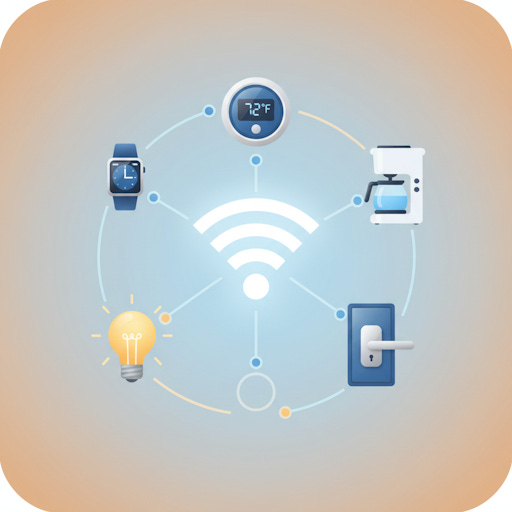
Here’s the simple version: IoT means everyday objects that connect to the internet and do something useful with that connection. The Internet of Things describes physical devices embedded with sensors, software, and network connectivity that collect and exchange data.
Your old thermostat? You set it manually. A smart thermostat? It learns your schedule, checks the weather forecast, and adjusts itself. You can also control it from your phone while you’re at the grocery store.
The “smart” part isn’t about the device being clever on its own. It’s about connection. That thermostat talks to weather services, to your phone, to your utility company. It gathers information and acts on it.
Think of it like giving your stuff a nervous system. Before, each device worked alone. Now they can sense things, share information, and coordinate with each other.
The Problem IoT Devices Solve
You’re probably thinking this sounds like a solution looking for a problem. Fair enough.
But here’s what IoT actually solves for older adults: the gap between where you are and what you need to know. Your basement is flooding while you’re on vacation. Your elderly parent fell and can’t reach the phone. You forgot whether you locked the front door.
These aren’t hypothetical scenarios. They happen every day. Before IoT, you had no way to know about these problems until it was too late. Or you lived with constant anxiety, wondering.
Smart home devices for elderly users act as your eyes and ears when you can’t be there. They catch small problems before they become disasters. They give you control over your home from anywhere.
Real Examples from Real Life
Margaret, 73, lives alone in Phoenix. She wears a watch that monitors her heart rate. Last March, it detected an irregular heartbeat and alerted her daughter. The hospital confirmed she was having a minor cardiac event. She’s fine now, but only because the watch caught it early.
Tom, 68, travels often to visit grandkids. He installed a smart water sensor under his washing machine. Good thing too. It detected a leak while he was in Florida. He called a neighbor who shut off the water. Saved him thousands in damage.
These aren’t tech enthusiasts. They’re regular people who found specific solutions to specific concerns about aging safely at home.
Understanding IoT Basics
Most IoT devices need three things: an internet connection, power, and an app on your phone. That’s it.
The device connects to your home WiFi, just like your phone does. It runs on batteries or plugs into the wall. You download an app that lets you see what the device sees and control what it does.
No computer science degree required. If you can use a smartphone, you can use smart home devices for seniors. Companies have gotten much better at making setup simple. Many devices now guide you through the process step by step.
Why This Technology Matters Now
You might be wondering why IoT for older adults matters to you specifically. After all, you’ve managed fine without smart devices for decades.
It’s because IoT isn’t about replacing what works. It’s about adding a safety net for what doesn’t. As we age, certain things get harder. Remembering to take medication. Hearing the doorbell. Getting up quickly when something goes wrong.
Smart home technology for seniors can handle these gaps quietly, in the background. These devices aren’t flashy or complicated. They just work, giving you and your family peace of mind.
The technology is finally mature enough to be reliable. Prices have dropped to reasonable levels. And the devices are designed for actual humans, not just gadget enthusiasts.
What Connected Devices Can Do
IoT devices for home safety include fall detection systems, medication reminders, smart doorbells with video, and emergency alert systems. Voice-activated smart assistants like Amazon Alexa and Google Home let seniors control lights, thermostats, and appliances with simple voice commands.
Smart home features for independent living also include automated lighting that prevents falls, smart locks you can control remotely, and appliance monitoring systems that alert you to unusual activity. These connected devices work together to create a safer environment.
What Comes Next in This Series
Over the coming weeks, we’ll explore specific smart home devices that matter most for safety, health, and staying independent. You’ll learn which IoT devices are worth considering and which are just expensive toys.
We’ll talk about real costs, real benefits, and real concerns. No hype, no technical jargon. Just practical information you can use about the Internet of Things explained simply.
Because IoT isn’t really about things at all. It’s about making life easier and safer. And that’s something everyone can appreciate.

