

You may have had that irritating little stumble in the kitchen. Your toe catches on the rug, you grab the counter, and you tell yourself it was nothing. Or perhaps you’ve begun holding the stair rail tighter than you used to.
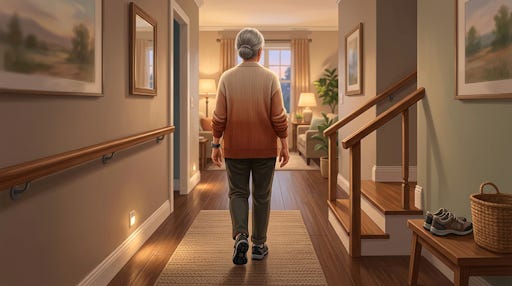
That feeling is worth paying attention to. Falls are common, but they are not an unavoidable part of getting older. You can lower your risk by looking at your health, your medicines, your home, and the small pieces of technology that make daily life safer.
What usually causes senior falls?
Most falls come from several things happening at once. A dim hallway may not cause a fall by itself. Neither might stiff knees, a sleepy-making medicine, or an uneven doorstep. Put two or three together on a tired day, though, and your chances change.
The CDC lists weakness, walking and balance problems, poor vision, chronic medical conditions, medication side effects, and hazards around the home among the factors that raise fall risk. A previous fall is also a warning sign worth taking seriously.
More than 14 million older adults report a fall each year. In 2024, falls among adults 65 and older led to about 4.5 million emergency-department visits and more than 43,000 deaths.
The more useful question is not, “Am I getting old?” It is, “What has changed in the last few months?”
Think about these changes:
You avoid a walk because your hips or knees hurt.
You’ve started shuffling, especially when you first get up.
Your glasses no longer seem right for steps or curbs.
You rush to the bathroom at night in poor light.
You have begun taking a new prescription, sleep aid, or pain medicine.
You tripped once, then changed your routine because you don’t trust your balance.
Those are practical clues. They give you and your clinician something specific to work on.
If you're still keeping your passwords on paper, TheSeniorTechie strongly recommends getting a password manager. Give RoboForm a try - Security.org named it the “best password manager of 2026,” citing its strong security, support for passkeys, and very low cost.
What can you check this week?
Write down any recent stumbles, near-falls, or moments when you grabbed furniture to steady yourself. Include the time, where you were, your shoes, and what you were doing. That little record gives your doctor much more than “I’ve been a little unsteady lately.”
Why do strength and balance matter?
Your legs and balance system do a remarkable amount of work without fanfare. They help you turn around in a tight bathroom, step over a dog bed, carry laundry, and recover when you misjudge a curb.
When leg strength fades, or your balance becomes less certain, ordinary movements need more attention. Arthritis, past strokes, Parkinson’s disease, diabetes-related nerve damage, foot pain, and inner-ear problems may all affect how steadily you move.
Have you ever noticed that you feel steadier after you have been moving for a few minutes? Or that you are less steady after sitting through a long television program? Those everyday patterns matter.
A physical therapist can check your walking, footwear, cane or walker, and ability to rise from a chair. They can also give you exercises that fit your actual abilities. This is far more useful than copying an exercise video that assumes you are already comfortable with every movement.
Stay confident with your tech, and keep your mind sharp. Premium subscribers get every Premium Guide, exclusive Brain Health and AI For Seniors Deep Dives, and full access to TechMaid for lifetime tech support (normally $50/year—yours free). You also won’t see this message.
What can you do today?
Practice standing from a sturdy chair, using the arms if you need them. Do it slowly and safely near a counter or solid piece of furniture. Ask your clinician whether a balance or strength program would be appropriate before beginning a new routine.
If you already use a cane or walker, have someone check its height and condition. An assistive device that is too short, too tall, or poorly used can create its own trouble.
Can medicines raise your fall risk?
Yes. Prescription medicines, over-the-counter products, supplements, and herbal products can all contribute to falls. They may cause dizziness, drowsiness, confusion, blurry vision, weakness, or slower reactions.
That does not mean your medicine is wrong, or that you should stop taking it. It means a periodic medication review is part of staying safe.
Medication groups often linked with falls include:
Sleep medicines and sedatives
Benzodiazepines used for anxiety or sleep
Opioid pain medicines
Antidepressants
Antipsychotic medicines
Anticonvulsants
Muscle relaxants
Medicines that affect blood pressure
Diuretics, often called water pills
Certain antihistamines and nighttime cold medicines
The problem sometimes begins with a simple change. You start a new sleep aid. Your blood-pressure dose increases. You take a “PM” pain medicine for a sore back. You feel groggy the next morning, get up in the dark, and your usual sure-footedness is gone.
Have you started, stopped, or changed the dose of any medicine in the past three months? If so, mention it.
How do you handle a medication review?
Bring everything you take to one appointment. That includes prescriptions, vitamins, sleep aids, creams, eye drops, supplements, and occasional over-the-counter products.
Ask your doctor or pharmacist:
Which of these could make me dizzy, sleepy, or unsteady?
Are two of my medicines causing similar side effects?
Does the time I take a medicine matter?
Could a lower dose or a different medicine work as well?
What should I watch for after a medication change?
Do not stop prescription medicine suddenly unless a clinician tells you to. The safe answer may be a smaller dose, a different schedule, a substitute, or closer monitoring.
Does low blood pressure matter?
Orthostatic hypotension, also called postural hypotension, means your blood pressure drops when you stand up. It can cause dizziness, lightheadedness, blurred vision, weakness, or fainting.
It is one of several recognized fall-risk factors. It is not the explanation for most falls, and it should not dominate every discussion of fall prevention. Still, if you feel dizzy when you rise from bed, a chair, or the toilet, it deserves a conversation with your clinician.
Blood-pressure medicines, diuretics, dehydration, illness, alcohol, and some neurological conditions can make these episodes more likely. The practical response is simple: move slowly, hold a stable surface, and sit back down if you feel unsteady. I’ve got it, and I’ve learned to get up out of a chair very slowly.
What is the safe next step?
Tell your clinician exactly when the dizziness happens. Morning? After meals? After a hot shower? After taking a particular medicine? They may check your blood pressure while you are lying down and after you stand.
Do not assume every dizzy spell comes from low blood pressure. Inner-ear trouble, heart rhythm problems, low blood sugar, infection, dehydration, and other conditions may need attention.
Which home hazards trip you up?
You know your home so well that you can stop seeing its trouble spots. That’s the catch. A curled rug edge, a power cord, a dark stair landing, or a narrow path around furniture can become invisible until one bad step makes it very visible.
The National Institute on Aging recommends home-safety changes because falls can lead to fractures, hospitalization, and disability.
Walk through your home in the evening, when you are tired and the light is lower. Ask yourself: Could I safely get from the bed to the bathroom if I woke at 2 a.m.?
Check these areas:
Loose rugs, cords, magazine piles, and pet toys
Dark hallways, stairs, closets, and entrances
Slippery bathroom floors and tubs
Stairs without secure handrails
Frequently used items stored too high or too low
Shoes that are worn, loose, or slippery indoors
Clutter around the bed, favorite chair, and kitchen work area
What should you change first?
Start with the route you use most often at night. Clear it, add lighting, and make sure you have a stable surface to hold if needed.
Install grab bars near the toilet and in the shower. A towel bar is not a grab bar. It may look sturdy right up until the day it pulls loose.
Can technology help prevent a fall?
Technology can help, especially when it solves a specific daily problem. It cannot replace strength, safer habits, good medical care, or a better-lit hallway. But it can make those efforts easier.
A few useful choices are:
Motion-sensor night lights for the bedroom-to-bathroom path
Smart bulbs or plugs that let you turn on lights by voice or phone
A home blood-pressure monitor if your clinician wants you to track readings
Pill reminders or a timed medication dispenser
A smartwatch or personal emergency-response device
A medical alert pendant with a button you can press after a fall
Fall-detection features that may call emergency services or alert contacts if you cannot respond
The right device depends on what worries you. If you live alone and fear being unable to reach the phone, a medical alert device may be worthwhile. If nighttime bathroom trips are your weak spot, motion lighting may do more for you than a watch full of features.
Fall-detection technology can miss falls or mistake a sudden movement for one. Keep your emergency contacts current, wear the device consistently, and charge it. Treat it as a backup plan, not a guarantee.
For reliable guidance, the CDC’s fall-prevention resources offer practical checklists and information. For a clear look at device features, Apple’s Apple Watch safety information explains how Fall Detection works and its limits.
Frequently Asked Questions
Q: Can new eyeglasses make me feel less steady?
A: New eyeglasses can temporarily change how you judge curbs, steps, and distances, especially with bifocals or progressive lenses. Give yourself time to adjust and use handrails.
Q: Are rugs always unsafe for older adults?
A: Rugs are not automatically unsafe, but loose edges, thick pile, and rugs without non-slip backing can create a tripping or sliding risk.
Q: Should I tell my doctor about a fall if I was not hurt?
A: Yes. A fall without injury may still reveal a balance, vision, medication, blood-pressure, or home-safety problem worth addressing.
Q: Does a medical alert pendant work outside the house?
A: Some systems work only near the base unit at home, while mobile systems use cellular service and may work away from home. Check the coverage details before you buy.
What is one place in your home where you feel even a little less steady than you used to?


Love this article, thank you. One thing I'd add is while a Physical Therapist will help with strength and balance, an Occupational Therapist will assess the environment for areas that are fall hazards, set up routines and habits (i.e. midnight bathroom trips free of hazards, raised toilet seats to support safety) and other ways the person/environment/ and occupational come together to prevent falls. Don't overlook the obvious ways one can make the home safer; that's the contribution of an occupational therapist!