

You may have spent decades paying for your home, only to wonder whether somebody could change the paperwork behind your back. That worry isn’t silly. Deed fraud is real, and it belongs to a much larger group of real estate scams that can cost you your savings, your property, or both.
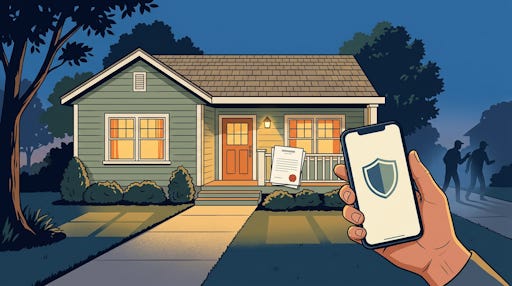
The good news is that you don’t need to become a land-records expert. You can take a few sensible steps, use a little technology in your favor, and know exactly what to do if something looks wrong.
What exactly is deed fraud?
Deed fraud, also called title fraud or deed theft, happens when a criminal files documents that falsely make it appear they own your property. They may forge your signature, use a fake identification card, impersonate you, or misuse personal information stolen elsewhere.
Once a false deed is recorded, the criminal may try to:
Sell your home or vacant land
Borrow against the property
Rent out a home they don’t own
Transfer ownership to a company they control
Use the false ownership claim to pursue other scams
This is not the same as a simple contractor dispute or an overpriced home repair job. Those are serious problems too, but deed fraud attacks the legal ownership record itself.
The FBI reported 12,368 real estate fraud complaints in 2025, with reported losses of more than $275 million. That category is broader than deed fraud alone. It includes investment, rental, timeshare, and other property schemes. Still, the number makes one thing plain: real estate is a big target because the dollars involved are big.
Have you ever received mail about a loan you never applied for and thought, “That has to be a mistake”? With property fraud, it might be the first warning that deserves a closer look.
Live by yourself? ElliQ by Intuition Robotics is an AI companion robot for older adults, designed to promote social connectedness while serving as a home care hub. By anticipating your needs, ElliQ proactively initiates personalized conversations, learns and remembers, and collaborates with you and your care team to achieve your health and wellness goals.
Why might older homeowners face more risk?
Older adults are not automatically victims, and it does nobody any favors to suggest otherwise. But certain situations make a property more attractive to criminals.
A mortgage-free home is one example. Criminals may see clear ownership as an opportunity because there is no lender watching the property closely. A vacant house, second home, inherited lot, or rental property can also be easier to target because the owner may not see mail, notices, or activity right away.
The National Association of REALTORS® notes that scammers often target homes that are vacant or have no mortgage. Federal cases have shown the same ugly pattern: criminals have used forged signatures, fake notary stamps, and false deeds to transfer homes owned free and clear by older adults.
That doesn’t mean you should panic if your mortgage is paid off. It means you should stay visible in your own records.
You may be at higher risk if:
You own a house or land that sits empty much of the year
Property tax bills go to an old address
You inherited property and haven’t checked the public record lately
Your deed is held in a trust, LLC, or family arrangement that is easy to overlook
Your personal information has been exposed in a data breach
You rely on email for real estate, banking, or legal communications but rarely review notices
Picture this: you’re drinking coffee on a Tuesday morning when an email says your property-tax mailing address has changed. You didn’t request it. You feel confused, then annoyed. That’s the moment to slow down, verify the notice independently, and call the county office using a number from its official website.
Get everything TheSeniorTechie offers with our Premium membership: monthly Brain Health and AI For Seniors Deep Dives, step‑by‑step Premium Guides, and lifetime TechMaid support (a $50/year service, included at no extra cost). You also won’t see this message.
How does real estate fraud spread?
Deed fraud is one lane in a much wider real estate fraud problem. Knowing the other lanes helps you notice when one scam starts blending into another.
Common forms include:
Wire fraud at closing: A criminal impersonates your real estate agent, lawyer, lender, or title company and sends new wire instructions.
Rental listing fraud: Someone advertises a property they don’t own, collects deposits, and disappears.
Foreclosure rescue scams: A company promises to save your home, then demands payment, a deed transfer, or control over your finances.
Home-improvement and reverse-mortgage fraud: A dishonest operator pressures you into financing, repairs, or loan arrangements you don’t fully understand.
Elder financial exploitation: A caregiver, relative, or trusted person misuses a power of attorney or pressures an owner to sign documents.
Technology can make these scams faster. A criminal can use stolen personal details, public property records, email, text messages, and fake documents without ever standing on your porch.
But technology also leaves trails. That is where you gain some protection.
What technology can protect your property?
Technology is helpful when it gives you early notice. It is less helpful when it promises to “lock” your title forever. No private service can prevent every fraudulent filing, and no app replaces paying attention to your county’s official records.
Start with your county recorder or register of deeds office. Many counties offer free property or recording alerts. You enter your name, and the system sends an email when someone records a document using that name or, in some places, involving your parcel.
Search online for:
[Your county name] property fraud alert
Use only the official county government website. A free public alert is often the best first step.
You should also:
Check the online property record at least once or twice a year.
Confirm your mailing address with the county tax assessor and recorder.
Turn on account alerts at your bank, brokerage, and credit-card accounts.
Use strong, different passwords for your email and financial accounts.
Turn on two-factor authentication, especially for email.
Freeze your credit with the three national credit bureaus if identity theft is a concern.
Keep the original deed, title insurance policy, and closing documents in a safe place.
A county alert does not stop a criminal from filing a forged deed. What it does is give you a chance to react quickly. That can make a world of difference.
For a federal starting point, you can visit the FBI’s Internet Crime Complaint Center. For a plain-language guide from a major real estate authority, the National Association of REALTORS® has a consumer guide to title fraud.
What should you do if something seems wrong?
Act quickly, but don’t rush into paying a company that calls itself a recovery service. A second scam often follows the first.
If you suspect deed fraud or another property scam:
Contact your county recorder or register of deeds immediately.
Ask for copies of every recently recorded document involving your property.
Call your title insurance company if you have an owner’s policy.
Contact local law enforcement and file a report with the FBI’s IC3.
Speak with a real estate attorney promptly, especially if a deed, lien, or loan appears fraudulent.
Contact your bank if money moved or a wire transfer was involved.
Place a fraud alert or credit freeze with the credit bureaus.
Save every email, text, envelope, property notice, and document.
If you are 60 or older, the U.S. Department of Justice’s National Elder Fraud Hotline can help you understand reporting options and connect you with support. You can reach it at 833-372-8311, Monday through Friday.
Don’t worry about feeling embarrassed. Fraud works because criminals are practiced at making false paperwork and fake messages look ordinary. Asking for help is the right move.
How can you make prevention routine?
You don’t need a complicated system. Put two reminders on your calendar each year, perhaps when you change smoke-detector batteries or review insurance coverage.
On those days:
Check your county property record
Review your tax bill and mailing address
Scan your credit reports and financial alerts
Confirm that your email password and two-factor authentication still work
Review who has authority to act for you under a power of attorney or trust
If you own a second home, vacant lot, inherited property, or rental unit, add it to the same review. Those properties deserve attention because they are easier for a criminal to work around unnoticed.
Deed fraud is serious, but it isn’t magic. It relies on secrecy, delay, and confusion. Free county alerts, careful attention to mail, protected online accounts, and a quick response can take away much of that advantage.
Frequently Asked Questions
Q: Does title insurance cover deed fraud?
A: Title insurance may cover legal defense and certain losses related to forged deeds, but coverage depends on your policy and the facts of the claim. Review your owner’s policy or ask the title company directly.
Q: Can a forged deed really remove me from my own home?
A: A forged deed can create a damaging public-record problem, but fraud does not automatically make the criminal the lawful owner. You need legal help quickly to challenge the document and protect your rights.
Q: Do I need to pay for a home title monitoring service?
A: Paid monitoring may offer extra features, but begin with free alerts from your county recorder or register of deeds. Verify what the service actually monitors before paying for it.
Q: Can my family sign up for alerts on my behalf?
A: County rules vary, but many alert systems allow multiple email addresses or registrations for names connected with a property. Check your county’s official instructions.
Q: What is the first property record I should check?
A: Start with the deed and the property’s current owner name in your county’s official land-records system, then look for unfamiliar liens, mortgages, or recently recorded documents.

