

Have you stood in a shelter, looking at a wagging tail, and thought “I love this dog, but can I actually keep up with it for the next twelve years”? That’s not a silly worry. That’s you being honest with yourself, and honestly, more people should be.
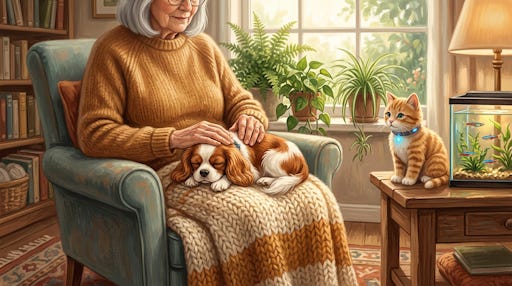
Why Does Pet Choice Feel So Complicated Now?
You’re not the same person who raised three kids and a Labrador at the same time. Your knees might complain on stairs. Your schedule might include doctor visits you didn’t used to have.
None of that means you should skip a pet. It just means the right pet at 75 looks different than the right pet at 35.
Keep your brain sharp with monthly Brain Health and AI For Seniors Deep Dives, and premium tech guides by becoming a Premium subscriber. TechMaid 24/7 tech support (a $50/year value) included.
What Small Dogs Actually Work Best?
If you want that daily walk-and-cuddle relationship but worry about strength or stamina, look at breeds bred for calm temperaments and low energy. Cavalier King Charles Spaniels, Bichon Frises, and Shih Tzus show up again and again in senior recommendations, and there’s a reason.
These dogs are small enough to lift into a car, gentle enough for arthritic hands to handle, and social enough to keep you from feeling isolated. A friend of mine adopted an older Cavalier from a rescue instead of a puppy, and skipped the whole chewed-shoe phase entirely.
Cavalier King Charles Spaniel: affectionate, low energy, adapts to apartments
Bichon Frise: hypoallergenic coat, cheerful, minimal exercise needs
Shih Tzu: sturdy, low activity requirement, good lap companion
Older shelter dogs: already house-trained, calmer temperament, often overlooked
Should You Consider a Cat Instead?
Cats don’t need walks. They don’t need you to get up at 6 a.m. in the rain. If your knees or your schedule are the deciding factor, a cat solves both problems while still giving you something warm to talk to at the end of the day.
Have you thought about adopting an adult or senior cat rather than a kitten? Shelters are full of cats who are already calm, already litter-trained, and honestly grateful for a quiet home instead of a chaotic one.
What About Birds, Fish, or Small Mammals?
If daily physical care feels like too much right now, birds like parakeets or cockatiels give you sound and personality without demanding walks. A tank of fish is even simpler: no allergies, no vet bills to speak of, and there’s something genuinely calming about watching them glide around.
Small mammals like guinea pigs or rabbits sit in between: more interaction than fish, less commitment than a dog. Pick based on your actual daily energy, not what you think you should want.
Can a Robotic Pet Really Help?
Here’s where I get to combine my two favorite subjects: seniors and technology. Robotic pets like Joy For All’s companion dogs and cats are not toys, they’re built specifically for older adults, especially those managing memory issues or limited mobility.
These things purr when you touch them, respond to sound, and never need a vet appointment. Research on robotic pet interventions found real reductions in agitation and loneliness among older adults, particularly those with dementia. A device called the Tombot Puppy goes further, using AI to make its movements feel more lifelike, and it’s aimed specifically at dementia care.
Would something like that feel silly to you, or would it feel like a relief? Different people answer that question very differently, and both answers are fine.
A small low-energy dog takes moderate daily effort but rewards you with real companionship if you can still manage walks. A cat asks very little of you day to day and suits anyone with limited mobility who still wants a warm presence in the room. Birds want almost nothing physical from you but bring sound and personality into a quiet house. Fish ask for even less than that, just a clean tank and a few minutes of feeding. And a robotic companion pet needs nothing more than an occasional charge, which makes it worth considering if memory concerns or minimal upkeep are your biggest worries.
Is There Real Tech Behind Regular Pet Care?
Yes, and this is where things get useful even if you go with a living, breathing pet. Automatic feeders can dispense food on a schedule if your hands or memory aren’t as reliable as they used to be. GPS trackers clip onto a collar so a wandering dog doesn’t turn into a panic. Pet cameras let you check on a cat from your phone while you’re at a doctor’s appointment.
None of this is flashy, but it quietly removes worry. That’s the whole point of good technology for you: not excitement, just fewer things to stress about.
What Should You Actually Do Next?
Before you adopt anything, be honest about three things: your daily energy level, your living space, and your budget for surprise vet bills. Visit a shelter and ask specifically about calm, older animals, they’re often the best-kept secret in pet adoption.
If a robotic companion sounds intriguing rather than silly, order one before committing to a living animal. There’s no shame in testing the waters.
Frequently Asked Questions
Q: Are older shelter pets healthier choices than puppies or kittens for seniors?
A: Older shelter pets are often calmer, already trained, and easier to predict temperament-wise, which fits well with a senior’s lifestyle.
Q: Do robotic pets actually help with loneliness?
A: Robotic pets have shown measurable reductions in loneliness and agitation in research on older adults, particularly those with dementia.
Q: What’s a reliable source for verifying pet adoption programs for seniors?
A: The AARP offers guidance on pet ownership and aging, and many local Humane Societies partner with senior discount adoption programs, both worth checking directly.
Q: How do I find a trustworthy tech gadget for pet care, like a camera or feeder?
A: Check reviews on Apple Support-verified accessories or major retailers before buying, and avoid unfamiliar brands with no return policy.
For more on aging-in-place resources, the AARP’s official site (aarp.org) has a dedicated pet ownership section for older adults, and Apple Support (support.apple.com) has guidance if you’re pairing a pet camera or tracker with an iPhone.
What’s pulling at you more right now: the companionship of a living pet, or the simplicity of something like a robotic one?


This is thoughtful and practical, even for someone like me who doesn’t want a pet. I still understand the point you’re making: the “right” companion changes as we age, and the decision deserves honesty, not guilt. I like how you break down the options by energy, mobility, and daily effort — it makes the whole topic feel less emotional and more realistic. Even without wanting a pet myself, I can appreciate the message: choose what truly fits your life now, not what fit decades ago.
I have a large Doberman a rescue who is my perfect companion & best friend. A l Watson Happy & loves people (He has quite a fan base). Have owned &/or adopted Dobermans since 1996 and adopt from a very reputable Doberman organization (new adopters must go through a fairly strict adoption process, dog is to get treated as companion only. All initial vaccinations, neuter/spayed at time of adoption. They try to match the dog to the person & living environment. If, for some reason, the dog doesn't work out it must be returned to the organization.