

You’ve probably already decided: you’re staying home. Your own kitchen. Your own neighborhood. Your own routines. More than 75% of older Americans feel exactly the same way, according to a recent AARP survey. But here’s the uncomfortable part: 40% of those same people aren’t sure they can pull it off financially.
That’s not pessimism. That’s a realistic look at some costs that tend to sneak up on people.
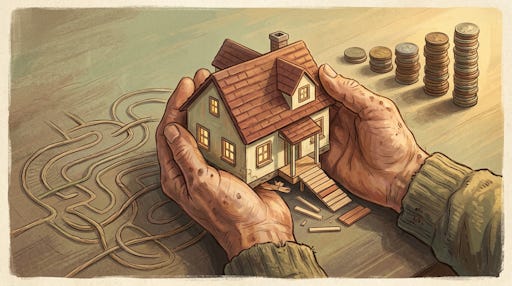
Is Your Home Actually Ready for You?
Most homes built in the last 50 years weren’t designed with aging in mind. Steps everywhere. Narrow doorways. Slippery bathtubs. “There are very few homes in the United States, particularly single-family homes, that are what we’d consider accessible,” said Linda Couch, Senior Vice President of Policy for LeadingAge, a national association of nonprofit aging services providers.
Making a home genuinely safe often means real renovations:
Zero-step entries so you’re not navigating steps just to get inside
Curbless showers to cut the risk of bathroom falls
Wider hallways and doorways to accommodate a walker or wheelchair
These aren’t luxury upgrades. They’re practical changes. And they cost money, sometimes several thousand dollars, sometimes much more depending on your home’s layout.
Some organizations have recognized this gap and built services specifically around it. Givens Home First, based in Asheville, NC and an affiliate of Givens Choice, focuses exactly on this problem: helping people assess and adapt homes that were simply never built with aging in mind. It’s the kind of resource most people don’t know exists until they need it urgently.
Action step: Contact your local Area Agency on Aging to ask about home modification grant programs. Many states have them, and most people never find out.
Premium subscribers get full access to all Premium Guides (including our monthly brain health and AI For Seniors Deep Dives) plus lifetime tech support from our partner TechMaid (a $50/year value, included for free).
What Does In-Home Care Actually Cost?
This is where a lot of plans quietly fall apart. Medicare pays for hospital care and doctor visits. It doesn’t pay for the kind of help most people actually need when aging at home: someone to assist with bathing, meals, medication reminders, or getting around safely.
That cost falls entirely on you and your family. And it adds up fast. A significant need for help with two or more daily activities affects half of people over 65, and nearly one in six will need care for more than five years, at an average lifetime cost exceeding $260,000.
“The most important thing is to think through the finances in advance and not bury your head in the sand,” said Amy Goyer, AARP’s family and caregiving expert.
What If You Have Savings But Still Feel Anxious?
Here’s something the official conversation usually misses. This fear isn’t just for people with limited savings. Plenty of financially comfortable older adults lie awake worrying about the same thing: what if a serious illness wipes out everything Medicare won’t cover? Long-term care, memory support, years of in-home help. The numbers are real and they’re large.
That fear is exactly what Continuing Care at Home (CCAH) organizations are designed to address. Programs like Givens Choice, a Continuing Care at Home organization based in Asheville, NC, are membership-based models that provide access to a coordinated package of services, care coordination, and financial protection, without requiring you to move into a facility. You stay home. You pay a structured program fee. And you have a plan in place before the crisis hits.
It’s not a perfect fit for everyone, but for people who want peace of mind more than anything else, it solves the right problem.
Action step: Search “Continuing Care at Home” plus your city to find if a CCAH program operates near you. LeadingAge’s member directory at leadingage.org is a good place to start.
What If You’re Not “Poor” But Still Struggling?
Here’s something the official numbers hide. The federal poverty limit for a single person is about $15,650 a year. But researchers from the LeadingAge LTSS Center and the National Council on Aging found that an older adult living alone in a fully paid-off home still needs around $24,000 a year just to cover basic living expenses.
That gap matters because it means millions of older Americans earn too much to qualify for assistance programs, but not enough to actually feel secure. Roughly 80% of households with adults age 60 and over are either struggling right now or at real risk of financial crisis as they age.
Action step: Run your numbers through the Elder Index calculator from the University of Massachusetts Boston to see how your income compares to actual local costs.
Does Debt Change the Picture?
It does, and more than most people expect. Americans age 70 and older now owe more than $1.63 trillion in combined debt, which is more than double what it was a decade ago even after adjusting for inflation. Mortgages, car loans, credit card balances -- they don’t retire when you do.
That debt matters especially when something unexpected hits. Over a nine-year stretch, more than two-thirds of adults aged 70 and older will face at least one major financial shock: a serious illness, the loss of a spouse, or losing the ability to live independently.
Action step: Review your total monthly debt payments against your fixed income now, before a health event forces the conversation.
Where Do You Go for Help?
The system for supporting older adults at home is real but confusing. Start with these two reliable resources:
Benefits.gov (U.S. government) lists federal assistance programs you may qualify for, including housing repair grants and caregiver support
AARP’s AgingInPlace resource hub covers practical and financial planning in plain language
The Older Americans Act funds local programs specifically designed to keep people in their homes, including meal delivery, transportation, and caregiver respite. These programs exist in most counties. The challenge is that most people don’t know to ask.
Frequently Asked Questions
Q: Does Medicare cover any in-home care costs?
A: Medicare covers limited short-term skilled nursing or therapy services at home after a qualifying hospital stay, but it does not cover long-term personal care or homemaker services.
Q: What is a Continuing Care at Home program?
A: Continuing Care at Home is a membership-based model that provides coordinated services and care planning so older adults can age in their own homes with financial protection in place, without moving to a facility.
Q: Can I get financial help for home modifications?
A: Yes, programs through HUD, USDA, and state agencies often provide grants or low-interest loans for accessibility renovations; your Area Agency on Aging is the best starting point.
If you could solve just one part of the aging-in-place puzzle, financial or physical, what would it be?


Yes, you're home is affordable. But private equity has invested in medical care, food, utilities, transport, care homes, and everything they can grab so avariciously to ensure they can steal your home from you at a greatly discounted value.
It's time to realise we must take all this illicit power away from those who impoverish us. We do have a voice to clarify their lies.
The link to AARP’s caregiving cost calculator returns a 404 error for me. A search for same doesn’t fetch anything. Any chance you have another link to it?