

Gen Z didn’t grow up with technology. They grew up inside it. If you’re 60, 70, or 80-something, that’s a completely different starting point than yours, and it’s worth ten minutes to get the full picture.
Who exactly are we talking about?
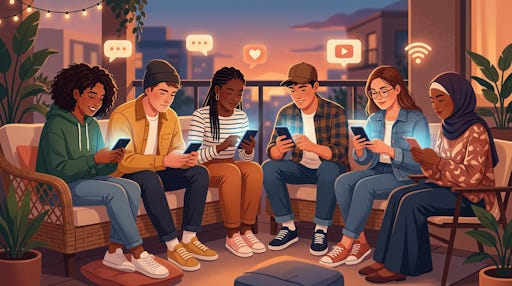
Gen Z covers people born 1997 through 2012, which puts them roughly 14 to 29 years old right now. That’s a huge range. Some are still in high school. Others are running businesses or raising toddlers.
What binds them together isn’t age. It’s that none of them remember a world before smartphones and constant internet. A Boomer remembers getting their first cell phone as an adult. A Millennial remembers dial-up. Gen Z never knew a “before.”
Quick action step: Next time you talk with a Gen Z family member, ask them how old they were when they got their first phone. The answer usually shocks people my age. Ten, eleven, twelve years old with a full internet connection in their pocket is normal for this group.
Get everything TheSeniorTechie offers with our Premium membership: monthly Brain Health and AI For Seniors Deep Dives, step‑by‑step Premium Guides, and lifetime TechMaid support (a $50/year service, included at no extra cost).
Why do they care so much about mental health?
This is the generation that talks openly about therapy, anxiety, burnout, and boundaries. To some seniors that reads as fragile. It’s not fragility. It’s information.
Gen Z grew up watching every mood swing get validated or ridiculed on social media in real time. They saw the toll early, so they started naming it early. Compare that to generations who were taught to just push through and not talk about it.
They also came of age through school shooting drills, a pandemic that hit during formative years, and climate anxiety baked into the news cycle since childhood. None of that is abstract to them. It shaped how they think about stability and the future.
What does “digital native” actually mean day to day?
It doesn’t just mean they’re good with phones. It means their brain learned to process information differently than yours did.
They scan and skim before they read deeply, because that’s how feeds train you
They trust peer reviews and creator recommendations more than traditional advertising or even some institutions
They move fluidly between five apps in a way that looks like distraction but is actually normal multitasking for them
They expect instant answers and get frustrated with slow, multi-step processes (this explains a lot of tech support conversations)
Actionable step for you: If you’re asking a Gen Z grandkid for tech help, don’t ask for a full tutorial. Ask them to just do the task once while you watch. They’ll move fast, and that’s fine. Ask questions after, not during.
A quick translation guide for slang and values
You don’t need to speak fluent Gen Z, but a few terms will save you confusion at the dinner table.
“No cap” means “I’m serious, not joking”
“It’s giving [something]” means “it has the vibe of that thing”
“Rizz” means charisma, especially the romantic kind
“Ghosting” means cutting off contact with no explanation, which is a real communication style now, not just rudeness
“Main character energy” means living like you’re the star of your own story, which sounds self-centered but usually just means confidence
Values matter more than slang here anyway. This generation prizes authenticity over polish, diversity as a given rather than a debate, and side hustles as a normal part of a career, not a backup plan.
How does this connect to tech you already use?
Here’s where TheSeniorTechie angle comes in. Every platform you’ve heard your grandkids use, TikTok, BeReal, Discord, was essentially built around Gen Z habits first, then adopted by everyone else.
That means the tech trends aging into your world in a year or two are already fully lived-in by this generation. If you want a preview of what’s coming to Facebook or your bank’s app next, watch what Gen Z is doing with short video, voice notes, and AI chat tools right now. They’re not early adopters. They’re the test kitchen.
One more action step: Ask a Gen Z relative to show you one app they use daily that you’ve never heard of. You’ll learn more about the next five years of tech in that five minutes than from any tech column.
Gen Z isn’t a mystery generation speaking in code. They’re mostly your grandkids, your barista, and the person who fixed your printer last week, running on a completely different operating system than the one you learned on. Once you see the “why” behind the habits, the “what” stops feeling so foreign.


The "test kitchen" framing for Gen Z and tech is a good one. I hadn't thought of it that way before.
I coach a fair number of teenagers alongside my older students, and the generational gap shows up in ways that have nothing to do with slang. The teens want instant video feedback on their swing, one clip, watch it back, done. My 70 year old students want the full explanation first. Neither is wrong, they're just running on different operating systems, exactly like you said.
Have you noticed the reverse happening too, where older folks end up teaching the younger ones something tech related they didn't expect?
Haha love it. Great list of slang, yeah my 13 years old daughter mentions ghosting but haven't heard the rest before. Hey good tip to ask them to do run throughts, so true that they're better at showing than telling... and they do it super fast hey?!
They certainly feel like a mystery generation speaking in code, esp when they they get impatient, like "C'mon brah, this is so easy". Lol Cheers for the fun, fab post Paul.