

This is the second article in the series Across Generations. The first one can be found at TheSeniorTechie.com.
There’s a generation sandwiched between the Boomers everyone talks about and the Millennials everyone argues about. They’re in their mid-40s to early 60s now, quietly running departments, raising kids, and occasionally rolling their eyes at both ends of the generational spectrum. They’re Generation X, and there’s a decent chance one of them is your own adult child.
Who Are We Talking About?
Gen X was born between 1965 and 1980. In 2026, that puts them between roughly 46 and 61 years old. They grew up after the cultural upheaval of the ‘60s and before the internet changed everything. They exist in a kind of permanent in-between, which, honestly, they’ve turned into an art form.
If you’re a Boomer, this generation is most likely your son or daughter. If you’re in your late 70s or older, this might be your younger colleague from your working years, or even a niece or nephew you watched grow up fast, possibly too fast.
Get everything TheSeniorTechie offers with our Premium membership: monthly Brain Health and AI For Seniors Deep Dives, step‑by‑step Premium Guides, and lifetime TechMaid support (a $50/year service, included at no extra cost).
What Shaped Them?
Gen X came of age during a wave of social disruption that most people don’t fully appreciate. Divorce rates spiked dramatically during the 1970s and ‘80s, and Gen X absorbed that more directly than any generation before them. Many came home from school to empty houses, letting themselves in with a key on a string around their neck. “Latchkey kids” wasn’t a phrase invented to be clever. It described millions of childhoods.
At the same time, the Cold War was a daily background hum. They watched the Berlin Wall fall. They saw economic recessions hit before they’d even started their careers. Then came corporate downsizing in the ‘90s, gutting the idea that loyalty to a company meant anything at all.
The lesson they absorbed: count on yourself, because institutions won’t do it for you.
What Does That Look Like Today?
If you’ve ever noticed your adult child solving a problem before asking for help, or preferring a direct conversation over a long process, that’s Gen X in action.
Their core traits tend to cluster around a few recognizable patterns:
Self-reliance: They figure things out independently before asking anyone. A broken appliance? They’ll watch a YouTube tutorial before calling a repairman.
Healthy skepticism: Advertising, authority, and grand promises are all viewed with one eyebrow raised. They need to be shown, not told.
Practicality over idealism: They’ll choose the solution that works over the one that sounds inspiring. Results matter more than vision.
Dark humor: They laugh at the absurd because the absurd has been a constant companion.
None of this makes them cold or difficult. It makes them fiercely dependable once you’ve earned their trust.
Where Does Tech Fit In?
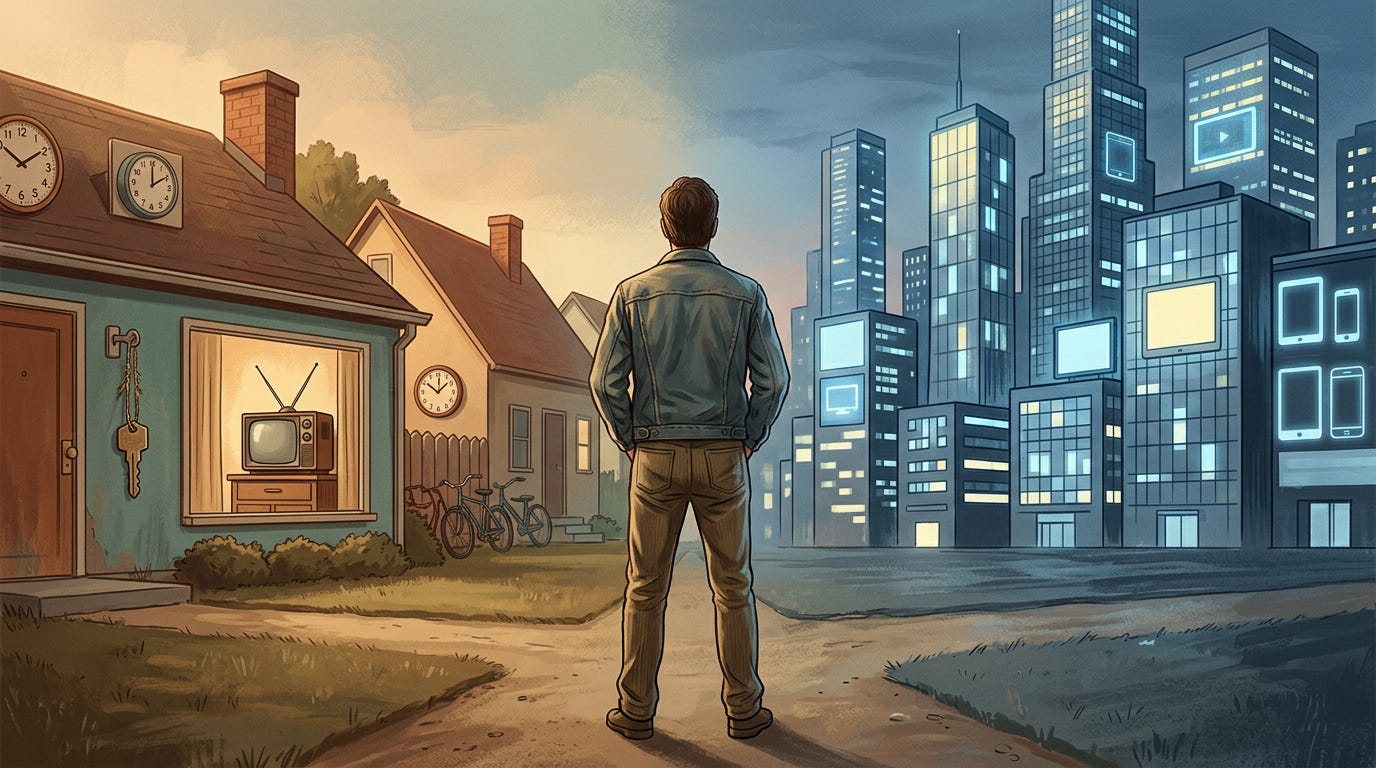
This is where Gen X sits in a genuinely fascinating position. They didn’t grow up with technology, but they adopted it as adults, which means they understand both worlds.
They remember card catalogs and handwritten letters. They also built their careers alongside the rise of email, cell phones, and the internet. They adapted by choice, not by birth, which gives them a kind of practical fluency that younger generations don’t always have.
Today, most Gen Xers are competent technology users without being dependent on it. They use smartphones, shop online, and stream entertainment. But they’re less likely to share every thought on social media, and they’re generally more protective of their privacy than Millennials or Gen Z.
When your adult child sets up your new tablet or walks you through a software update without making you feel foolish, that’s this adaptability at work. They’ve been learning new systems their whole lives. Helping you with one more is not a burden.
How Do You Actually Connect With Them?
Gen X doesn’t need or expect emotional processing out loud. They show love through action, showing up when it matters, handling problems without being asked, quietly making sure things work.
A few things worth knowing:
Be direct: Gen X respects honesty and finds roundabout conversations exhausting. Say what you mean.
Don’t require enthusiasm they don’t feel: A Gen X adult child who’s helping you without much fanfare is still fully invested. They express care through doing, not performing.
Give them credit for what they’ve quietly handled: This generation doesn’t broadcast accomplishments. They just get things done, and they notice when that goes unrecognized.
Ask their opinion, then actually consider it: They’ve been overlooked most of their lives. Being genuinely consulted means a lot to them.
Something Worth Sitting With
Gen X is the generation most likely to be simultaneously raising teenage children and helping aging parents, all while navigating their own career peaks or transitions. They’re doing this largely without complaint, because complaining isn’t really their style.
Understanding that context doesn’t require you to tread lightly around them. It actually does the opposite. It gives you a reason to be curious about them as people, not just as your adult child who knows how to fix the Wi-Fi.
They grew up fast, adapted constantly, and learned not to expect much from the world. When the world surprises them with genuine interest and appreciation, they notice. And they don’t forget it.


Six years teaching pickleball and my Gen X students are exactly like this. They've already watched a dozen YouTube videos before showing up to their first lesson. They don't ask for help, they show up with answers they want confirmed.
Takes a different approach to coach them well.